
Today we begin in some of the quietest places on the planet: the ice of Antarctica and the high, thin air of the Tibetan Plateau. Few people live there. Almost no industry runs there. And yet, when scientists went looking for man-made chemicals in the rain and snow, they found them.
Here’s the part that should bother us. Those chemicals were not a mystery. They were invented, sold and used for decades before anyone seriously asked what they do once they leave the factory. We found out the way we usually do: after the fact.
This article is about that pattern. There are roughly 350,000 chemicals and chemical mixtures on the global market, and thousands more arrive every year. Our ability to invent them has outrun our ability to test them. We’ll look at how that happened, what it has already cost us in health and cleanup bills, and what a simple change in the rules could look like. Let’s get into it.
350,000 and Counting
Start with the number in the title. In 2020, a team led by Zhanyun Wang at ETH Zurich combined 22 chemical inventories from 19 countries and regions. They counted more than 350,000 chemicals and chemical mixtures registered for production and use. [1] The last global tally, compiled around the turn of the millennium, had about 100,000. [1]
A caution, because we want you to trust the numbers we give you. Much of that tripling came from counting more registers, including countries where chemicals are registered under limited oversight, not only from new chemistry. [1] And 350,000 is the number registered for use, not a count of what has escaped into the environment. Many have. Which ones, and how much, is part of the problem.
Here is what stands out. For roughly a third of those entries, the public can’t tell what the substance is. About 50,000 have identities kept confidential as business information, and about 70,000 are loosely described mixtures and polymers. [1] Wang likened it to being assured a meal is well cooked without being told what’s in it. [1] Earlier work suggested that around 3 percent of chemicals may be cause for concern, which on this list would be roughly 6,000 substances. [1] No one can say which ones, because the data to sort them doesn’t exist.
And the list keeps growing. The 2026 Planetary Health Check, the annual Earth-system assessment from Germany’s Potsdam Institute for Climate Impact Research, puts the additions at an estimated 2,000 new entities every year. [2]
Levke Caesar, the report’s lead co-author, explained what that does to safety testing: our ability to invent and produce new chemicals has far outgrown our ability to understand and test them. Her summary of where that leaves us is “flying blind.” [2] Chemical pollution is also named as one of five major drivers of species extinction, so this is not only a human-health story. [2]
That mismatch is the basis for treating chemical pollution as a planetary-scale problem. In 2022, fourteen scientists led by Linn Persson argued that humanity is outside the safe operating space for “novel entities”: synthetic chemicals, plastics and other human-made materials. [4] Their logic is that the boundary is crossed when the pace of production and release outstrips governments’ ability to assess and monitor the risks. [4] The Stockholm Resilience Centre now tracks it with a plain proxy: the share of novel entities that get rigorous safety assessment before widespread use. That share is low. [5]
Not everyone likes the label. One critic, Jan Kunnas, argued this is really a societal boundary, a measure of whether screening keeps pace, rather than a physical Earth-system limit. Even so, he agreed that only a fraction of the chemicals in use has been assessed for risk or safety. [6] The dispute is over what to call the gap. Nobody disputes the gap.
Innocent Until Proven Guilty
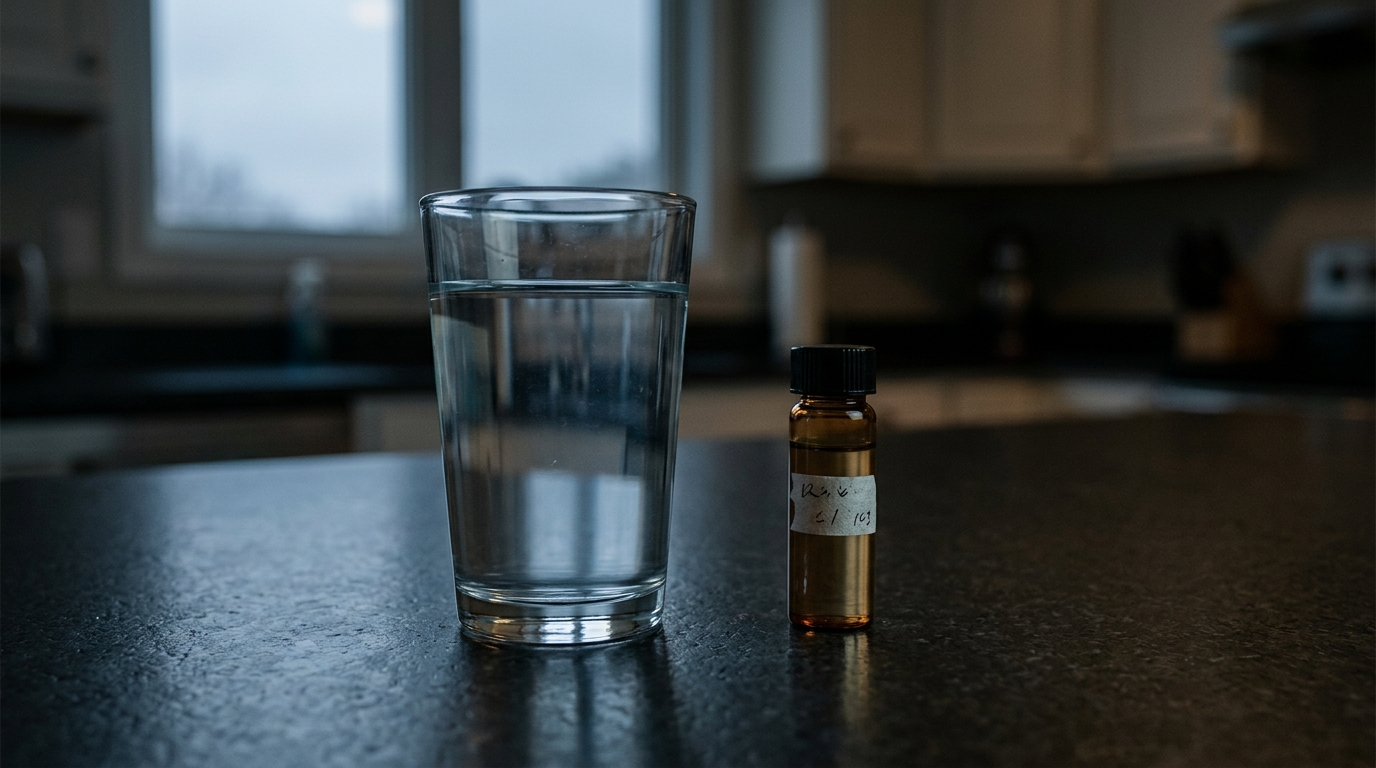
How did we get here? Partly through a legal habit: chemicals are treated as safe until someone proves otherwise.
The clearest example is U.S. law. When the Toxic Substances Control Act, or TSCA, passed in 1976, the Environmental Protection Agency inventoried roughly 62,000 chemicals already on the market. Those were grandfathered in, with no requirement that they be tested or reviewed for safety. [7] The burden ran the wrong way: the agency, not the manufacturer, had to show that a chemical posed an unreasonable risk. [7]
That burden proved close to impossible. In 1989, EPA moved to ban nearly all asbestos products, a substance long known to be extremely toxic. In 1991, a federal appeals court set the rule aside, finding the agency had not adequately weighed less burdensome options. [8]
New chemicals had an easier path than most people assume. Under the original law, companies notified EPA 90 days before manufacturing, no minimum safety data was required, and the agency typically got a single chance to review. [3][7] Reform came in 2016 with the Lautenberg Act, which requires EPA to make an affirmative finding on safety before a new chemical can enter the market. [7] But the grandfathered chemicals were never required to be reviewed in order to stay on the market. [7]
Europe took a different route. Since 2010, its REACH regulation has run on a principle called “no data, no market”: companies that make or import a substance at one tonne a year or more must register it and show they are managing the risks. [9][10] On paper, that puts the burden where it belongs. In practice, it depends on what companies submit. When two German federal agencies, the BfR and the UBA, examined registration dossiers, about a quarter of the individual endpoint checks showed data gaps or poorly justified waivers. [10]
The lesson from both sides of the Atlantic is the same. Moving the burden of proof is the first step. It also takes data, enforcement, and the capacity to check.
When the Rain Tests Positive
In August 2022, a team led by Ian Cousins at Stockholm University, with colleagues including Martin Scheringer of ETH Zurich, published a paper that made headlines worldwide. [11] They gathered published measurements of four PFAS, the so-called forever chemicals, in rainwater, surface water and soil, and compared them with the newest health guidelines. [11] It was a review of existing data, not a fresh sampling campaign. [11] The evidence was already sitting in the literature, scattered, waiting for someone to line it up.
The result: levels of two of these chemicals, PFOA and PFOS, in rain often greatly exceeded the U.S. Environmental Protection Agency’s updated lifetime drinking-water health advisories, which the agency had cut in June 2022 to 0.004 parts per trillion for PFOA and 0.02 for PFOS. [11] PFOA in rain exceeded its advisory in every region studied, even on the Tibetan Plateau, where the lowest reading was about 14 times over. [11] PFOS exceeded its advisory in most studies too, with two remote studies in Tibet and Antarctica the exceptions. [11] As Cousins put it, by the latest U.S. guidelines “rainwater everywhere would be judged unsafe to drink.” [12]
Before anyone panics, here is what that does and does not mean. First, in the industrial world we rarely drink rain. But the authors note that rain remains an important drinking source in some arid and tropical regions, and Cousins pointed out that it feeds many of our drinking-water supplies. [11][12] Second, the yardstick matters. The authors deliberately chose the strictest guidelines in the world and say these are not representative of guidelines internationally. [11] The 2022 U.S. figures were interim advisories, not enforceable limits. [11] EPA’s final 2024 drinking-water rule sets legal limits starting at 4 parts per trillion, [14] and legal limits must take analytical and economic factors into account. [13]
Third, and this is the real point: what moved was the yardstick, not the rain. The paper’s own example is a West Virginia drinking-water guideline for PFOA of 150,000 nanograms per liter about two decades earlier, which is 37.5 million times higher than EPA’s 2022 advisory of 4 picograms per liter. [11] Guidelines fell that far because we kept learning, and we learned it after the chemicals had spread worldwide. The most sensitive effect behind EPA’s 2022 advisories was suppressed vaccine response in children, measured as lower antibody levels. [11]
Why can’t we simply clean it up? These chemicals are extremely persistent, and they cycle between the oceans and the air, including on sea-spray aerosols that carry them back over land. [11] The authors concluded that levels in rain will be “practically irreversible.” [11] That is despite 3M, the main U.S. producer, having phased out PFOA and PFOS around two decades before the study. [11] And they see these four chemicals as only the visible part of a larger problem: PFAS as a class includes many thousands of substances, and the risks of most are unknown. [11]
What It Costs Us
The rain finding sounds abstract. The bills are not.
Health comes first. In 2022, a National Academies committee reviewed the evidence on PFAS and health. It found sufficient evidence linking exposure to reduced antibody response in adults and children, abnormal cholesterol, lower infant and fetal growth, and kidney cancer in adults. [15] It found limited or suggestive evidence for others, including breast cancer, testicular cancer, thyroid disease and high blood pressure in pregnancy. [15] A committee member noted that nearly everyone in the U.S. has been exposed. [15] One analysis estimated that more than 200 million Americans have tap water with PFOA and PFOS at 1 part per trillion or higher, which is below today’s legal limit but not at zero. [16]
Disease costs money. Leonardo Trasande and colleagues at NYU estimated what these chemicals cost the U.S. each year in medical care and lost productivity. Their lower-bound figure, based on PFOA and five conditions with meta-analytic support (low birth weight, childhood obesity, kidney cancer, testicular cancer and underactive thyroid in women), was $5.52 billion in 2018. Sensitivity analyses, using PFOS and a wider set of conditions, reached as much as $62.6 billion. [16] Europe’s numbers are larger: a Nordic Council of Ministers analysis put PFAS-related health costs in the European Economic Area at €52 to €84 billion a year. [17]
These are modelled estimates built on associations, and they come with a caveat. The European Food Safety Authority and the U.S. Agency for Toxic Substances and Disease Registry have both suggested that the evidence is not yet sufficient to confirm causation. [16] The authors argue that the costs of inaction are worth documenting even amid that uncertainty. [16]
Guidelines reach the construction industry too. In 2018, the Netherlands set soil limits for PFOS and PFOA. Because background levels in soils often exceeded them, about 70 percent of building projects involving soil removal and fill were halted, and the government relaxed the limits after builders protested. [11] The paper ties that background contamination to PFAS falling out of the atmosphere. [11]
Then there is cleanup. A European Commission study estimated that if PFAS pollution continues at current levels, the cost in Europe would reach about €440 billion by 2050, with the health portion covering only a handful of regulated PFAS. Treating polluted water alone would cost more than €1 trillion. [18]
In the U.S., the bill lands first on water utilities. EPA estimated its 2024 drinking-water rule at about $1.5 billion a year; the American Water Works Association has put it nearer $3.8 billion. [20] The association also estimates that as many as 7,500 utilities may need to invest more than $50 billion in treatment over 20 years, plus $3.5 billion a year to operate it. [19] Smaller systems lack economies of scale, so the cost per household runs higher. One water-industry expert told National Geographic it could reach hundreds of dollars a year per customer for large systems and thousands for small ones. [20] Orange County, California, alone estimates at least $1 billion for the infrastructure to meet its state’s recommended levels. [21] Cordner and colleagues observe that costs like these are rarely paid by the manufacturers. They usually land on utilities, ratepayers, and local and state governments. [21]
Manufacturers have begun to pay through lawsuits. As tallied by Milliman in mid-2024, 3M agreed to a settlement of $10.5 to $12.5 billion with U.S. water providers, DuPont and related companies $1.185 billion, Tyco $750 million and BASF $316.5 million. [14] By our arithmetic, that is roughly $13 billion to $15 billion in total. One actuarial model from the same firm estimated that remediating U.S. drinking-water systems could cost $120 billion to $175 billion. [14] Treat that as one estimate, not a verdict. But the gap shows how much is unresolved: whether the rest is covered by more litigation, by regulation, or by ratepayers and taxpayers.
The clock is stretching, too. EPA’s 2024 rule gave utilities until 2029 to meet the PFOA and PFOS limits. In May 2026, the agency proposed letting systems request until 2031, a proposal that was not yet final in the latest sources we could find. [22]
A note for our Canadian listeners. In 2024, Health Canada set a drinking-water objective of 30 nanograms per litre for the combined total of 25 PFAS. [23] In March 2025, the federal government proposed adding the PFAS class, excluding fluoropolymers, to the List of Toxic Substances under the Canadian Environmental Protection Act. [24] Because Canada’s number is a combined total, it cannot be compared directly with U.S. limits set for individual chemicals. [14][23]
Flipping the Burden of Proof
What would change this? The authors of the 2026 Planetary Health Check are direct. Boris Sakschewski, the report’s lead author, said companies should be required to show that what they put into their products is not harmful to the environment, and that the way new substances are released needs a complete overhaul. [2] That is the idea in one line: prove it is safe before it reaches the market, rather than waiting for the harm to show up in the rain.
It is not a new idea. The 2016 U.S. reform and Europe’s “no data, no market” rule both point that way. [7][10] But the shortfalls we covered show that a rule is only as strong as the data behind it and the enforcement that checks it. [10] And the economics favour acting early: the European Commission found that stopping PFAS releases at the source by 2040 would save about €110 billion, against more than €1 trillion to treat polluted water alone. [18] Pairing a prove-it-first rule with incentives for manufacturers who build safer chemistry is a topic for another day.
That is where we will leave it for today. The rain over Antarctica is not really a story about rain. It is a story about an order of operations: release first, ask questions later. We built an economy that runs on that order, and we are now paying for it in health costs and water bills.
The good news is that this is a design choice, and designs can be changed. So the next time you hear that a chemical is “approved” or “not regulated,” ask one simple question: who had to prove it was safe?
Sources
- Wang, Z., Walker, G. W., Muir, D. C. G., & Nagatani-Yoshida, K. (2020). Toward a global understanding of chemical pollution: A first comprehensive analysis of national and regional chemical inventories. Environmental Science & Technology. doi.org/10.1021/acs.est.9b06379. Findings and the Wang comment as reported in the ETH Zurich news release, “Underestimated chemical diversity” (February 2020).
- Caesar, L., Sakschewski, B., Andersen, L. S., et al. (2026). Planetary Health Check 2026: A scientific assessment of the state of the planet. Potsdam Institute for Climate Impact Research. doi.org/10.48485/pik.2026.25. The 2,000-per-year estimate, the “flying blind” remark and the Sakschewski comments are as reported in Mowbray, S. (2026, September 24). Earth life support systems are flashing red, warns 2026 Planetary Health Check. Mongabay.
- Environmental Defense Fund. Post on TSCA’s new-chemicals provisions, EDF Health blog (written during the TSCA reform debate, before the 2016 law). blogs.edf.org/health/?p=70
- Persson, L., Carney Almroth, B. M., Collins, C. D., et al. (2022). Outside the safe operating space of the planetary boundary for novel entities. Environmental Science & Technology, 56(3), 1510-1521. doi.org/10.1021/acs.est.1c04158. Boundary criterion as described in the Stockholm Environment Institute press release (January 18, 2022).
- Stockholm Resilience Centre. Novel entities (summary of the Planetary Health Check).
- Kunnas, J. G. (2022). Comment on “Outside the safe operating space of the planetary boundary for novel entities.” Environmental Science & Technology, 56(10), 6786-6787. doi.org/10.1021/acs.est.2c00524
- Environmental Defense Fund. Post on TSCA reform and new chemicals, EDF Health blog (grandfathered chemicals, burden of proof, the Lautenberg Act). blogs.edf.org/health/?p=4263
- Corrosion Proof Fittings v. EPA, 947 F.2d 1201 (5th Cir. 1991), as summarized in a legal analysis of TSCA. Mondaq PDF
- European Commission. REACH explained.
- German Federal Institute for Risk Assessment (BfR). Research project to enhance the quality of registration dossiers on chemicals (press release); see also the news release for the 2010 start of “no data, no market.”
- Cousins, I. T., Johansson, J. H., Salter, M. E., Sha, B., & Scheringer, M. (2022). Outside the safe operating space of a new planetary boundary for per- and polyfluoroalkyl substances (PFAS). Environmental Science & Technology, 56(16), 11172-11179. doi.org/10.1021/acs.est.2c02765 (open access: PMC9387091)
- Stockholm University / Green Science Policy Institute (2022, August 2). It’s raining PFAS: Even in Antarctica and on the Tibetan Plateau rainwater is unsafe to drink (news release with Cousins and Scheringer quotes).
- Chemical & Engineering News (2022). Report on the Cousins et al. study, including the Safe Drinking Water Act’s requirement that legal limits consider analytical and economic factors. doi.org/10.47287/cen-10027-leadcon
- Milliman (2024, July 23). PFAS liability estimate, pt. 1: Water district remediation (EPA’s 4 ppt limit, remediation estimate and settlement table).
- National Academies of Sciences, Engineering, and Medicine (2022). Guidance on PFAS exposure, testing, and clinical follow-up. National Academies Press. doi.org/10.17226/26156; news release. The remark on near-universal U.S. exposure is from committee member Kevin Elliott, MSU Today (July 28, 2022).
- Obsekov, V., Kahn, L. G., & Trasande, L. (2023). Leveraging systematic reviews to explore disease burden and costs of per- and polyfluoroalkyl substance exposures in the United States. Exposure and Health, 15(2), 373-394 (online July 26, 2022). doi.org/10.1007/s12403-022-00496-y. The 200-million figure is cited there from Andrews & Naidenko (2020), Environmental Science & Technology Letters, 7, 931-936.
- Goldenman, G., Fernandes, M., Holland, M., et al. (2019). The cost of inaction: A socioeconomic analysis of environmental and health impacts linked to exposure to PFAS. Nordic Council of Ministers. Record. Figure as cited in source 16.
- European Commission. New study confirms huge and growing costs of PFAS pollution (announcement of the report “The cost of PFAS pollution for our society”), via the European External Action Service.
- Sansone, K. Mitigating PFAS is going to be expensive: Water systems can seek funds from the companies responsible. WaterWorld (citing American Water Works Association figures). Article
- National Geographic. The U.S. plans to limit PFAS in drinking water. What does that really mean?
- Cordner, A., Goldenman, G., Birnbaum, L. S., Brown, P., Miller, M. F., Mueller, R., Patton, S., Salvatore, D. H., & Trasande, L. (2021). The true cost of PFAS and the benefits of acting now. Environmental Science & Technology, 55(14), 9630-9633. doi.org/10.1021/acs.est.1c03565
- U.S. Small Business Administration, Office of Advocacy (2026, May 20). EPA proposes to extend deadlines and revise definitions for PFAS drinking water rule. Status as of October 8, 2026 (proposals not final) per a secondary tracker, CheckedWater; confirm against the Federal Register (91 FR 29425) before publishing.
- Health Canada (2024). Objective for Canadian drinking water quality: Per- and polyfluoroalkyl substances.
- Government of Canada. Per- and polyfluoroalkyl substances (PFAS) (proposed order adding PFAS, excluding fluoropolymers, to Schedule 1 of CEPA, Canada Gazette Part I, March 8, 2025).