Tag: toxic chemicals

  • Flying Blind: The 350,000 Chemicals Nobody Tested

    Flying Blind: The 350,000 Chemicals Nobody Tested

    Today we begin in some of the quietest places on the planet: the ice of Antarctica and the high, thin air of the Tibetan Plateau. Few people live there. Almost no industry runs there. And yet, when scientists went looking for man-made chemicals in the rain and snow, they found them.

    Here’s the part that should bother us. Those chemicals were not a mystery. They were invented, sold and used for decades before anyone seriously asked what they do once they leave the factory. We found out the way we usually do: after the fact.

    This article is about that pattern. There are roughly 350,000 chemicals and chemical mixtures on the global market, and thousands more arrive every year. Our ability to invent them has outrun our ability to test them. We’ll look at how that happened, what it has already cost us in health and cleanup bills, and what a simple change in the rules could look like. Let’s get into it.

    350,000 and Counting

    Start with the number in the title. In 2020, a team led by Zhanyun Wang at ETH Zurich combined 22 chemical inventories from 19 countries and regions. They counted more than 350,000 chemicals and chemical mixtures registered for production and use. [1] The last global tally, compiled around the turn of the millennium, had about 100,000. [1]

    A caution, because we want you to trust the numbers we give you. Much of that tripling came from counting more registers, including countries where chemicals are registered under limited oversight, not only from new chemistry. [1] And 350,000 is the number registered for use, not a count of what has escaped into the environment. Many have. Which ones, and how much, is part of the problem.

    Here is what stands out. For roughly a third of those entries, the public can’t tell what the substance is. About 50,000 have identities kept confidential as business information, and about 70,000 are loosely described mixtures and polymers. [1] Wang likened it to being assured a meal is well cooked without being told what’s in it. [1] Earlier work suggested that around 3 percent of chemicals may be cause for concern, which on this list would be roughly 6,000 substances. [1] No one can say which ones, because the data to sort them doesn’t exist.

    And the list keeps growing. The 2026 Planetary Health Check, the annual Earth-system assessment from Germany’s Potsdam Institute for Climate Impact Research, puts the additions at an estimated 2,000 new entities every year. [2]

    Levke Caesar, the report’s lead co-author, explained what that does to safety testing: our ability to invent and produce new chemicals has far outgrown our ability to understand and test them. Her summary of where that leaves us is “flying blind.” [2] Chemical pollution is also named as one of five major drivers of species extinction, so this is not only a human-health story. [2]

    That mismatch is the basis for treating chemical pollution as a planetary-scale problem. In 2022, fourteen scientists led by Linn Persson argued that humanity is outside the safe operating space for “novel entities”: synthetic chemicals, plastics and other human-made materials. [4] Their logic is that the boundary is crossed when the pace of production and release outstrips governments’ ability to assess and monitor the risks. [4] The Stockholm Resilience Centre now tracks it with a plain proxy: the share of novel entities that get rigorous safety assessment before widespread use. That share is low. [5]

    Not everyone likes the label. One critic, Jan Kunnas, argued this is really a societal boundary, a measure of whether screening keeps pace, rather than a physical Earth-system limit. Even so, he agreed that only a fraction of the chemicals in use has been assessed for risk or safety. [6] The dispute is over what to call the gap. Nobody disputes the gap.

    Innocent Until Proven Guilty
    Glass laboratory beaker collecting meltwater and falling snow against a remote snowy mountain glacier, with faint chemical molecular structures rising in the mist.

    How did we get here? Partly through a legal habit: chemicals are treated as safe until someone proves otherwise.

    The clearest example is U.S. law. When the Toxic Substances Control Act, or TSCA, passed in 1976, the Environmental Protection Agency inventoried roughly 62,000 chemicals already on the market. Those were grandfathered in, with no requirement that they be tested or reviewed for safety. [7] The burden ran the wrong way: the agency, not the manufacturer, had to show that a chemical posed an unreasonable risk. [7]

    That burden proved close to impossible. In 1989, EPA moved to ban nearly all asbestos products, a substance long known to be extremely toxic. In 1991, a federal appeals court set the rule aside, finding the agency had not adequately weighed less burdensome options. [8]

    New chemicals had an easier path than most people assume. Under the original law, companies notified EPA 90 days before manufacturing, no minimum safety data was required, and the agency typically got a single chance to review. [3][7] Reform came in 2016 with the Lautenberg Act, which requires EPA to make an affirmative finding on safety before a new chemical can enter the market. [7] But the grandfathered chemicals were never required to be reviewed in order to stay on the market. [7]

    Europe took a different route. Since 2010, its REACH regulation has run on a principle called “no data, no market”: companies that make or import a substance at one tonne a year or more must register it and show they are managing the risks. [9][10] On paper, that puts the burden where it belongs. In practice, it depends on what companies submit. When two German federal agencies, the BfR and the UBA, examined registration dossiers, about a quarter of the individual endpoint checks showed data gaps or poorly justified waivers. [10]

    The lesson from both sides of the Atlantic is the same. Moving the burden of proof is the first step. It also takes data, enforcement, and the capacity to check.

    When the Rain Tests Positive

    In August 2022, a team led by Ian Cousins at Stockholm University, with colleagues including Martin Scheringer of ETH Zurich, published a paper that made headlines worldwide. [11] They gathered published measurements of four PFAS, the so-called forever chemicals, in rainwater, surface water and soil, and compared them with the newest health guidelines. [11] It was a review of existing data, not a fresh sampling campaign. [11] The evidence was already sitting in the literature, scattered, waiting for someone to line it up.

    The result: levels of two of these chemicals, PFOA and PFOS, in rain often greatly exceeded the U.S. Environmental Protection Agency’s updated lifetime drinking-water health advisories, which the agency had cut in June 2022 to 0.004 parts per trillion for PFOA and 0.02 for PFOS. [11] PFOA in rain exceeded its advisory in every region studied, even on the Tibetan Plateau, where the lowest reading was about 14 times over. [11] PFOS exceeded its advisory in most studies too, with two remote studies in Tibet and Antarctica the exceptions. [11] As Cousins put it, by the latest U.S. guidelines “rainwater everywhere would be judged unsafe to drink.” [12]

    Before anyone panics, here is what that does and does not mean. First, in the industrial world we rarely drink rain. But the authors note that rain remains an important drinking source in some arid and tropical regions, and Cousins pointed out that it feeds many of our drinking-water supplies. [11][12] Second, the yardstick matters. The authors deliberately chose the strictest guidelines in the world and say these are not representative of guidelines internationally. [11] The 2022 U.S. figures were interim advisories, not enforceable limits. [11] EPA’s final 2024 drinking-water rule sets legal limits starting at 4 parts per trillion, [14] and legal limits must take analytical and economic factors into account. [13]

    Third, and this is the real point: what moved was the yardstick, not the rain. The paper’s own example is a West Virginia drinking-water guideline for PFOA of 150,000 nanograms per liter about two decades earlier, which is 37.5 million times higher than EPA’s 2022 advisory of 4 picograms per liter. [11] Guidelines fell that far because we kept learning, and we learned it after the chemicals had spread worldwide. The most sensitive effect behind EPA’s 2022 advisories was suppressed vaccine response in children, measured as lower antibody levels. [11]

    Why can’t we simply clean it up? These chemicals are extremely persistent, and they cycle between the oceans and the air, including on sea-spray aerosols that carry them back over land. [11] The authors concluded that levels in rain will be “practically irreversible.” [11] That is despite 3M, the main U.S. producer, having phased out PFOA and PFOS around two decades before the study. [11] And they see these four chemicals as only the visible part of a larger problem: PFAS as a class includes many thousands of substances, and the risks of most are unknown. [11]

    What It Costs Us

    The rain finding sounds abstract. The bills are not.

    Health comes first. In 2022, a National Academies committee reviewed the evidence on PFAS and health. It found sufficient evidence linking exposure to reduced antibody response in adults and children, abnormal cholesterol, lower infant and fetal growth, and kidney cancer in adults. [15] It found limited or suggestive evidence for others, including breast cancer, testicular cancer, thyroid disease and high blood pressure in pregnancy. [15] A committee member noted that nearly everyone in the U.S. has been exposed. [15] One analysis estimated that more than 200 million Americans have tap water with PFOA and PFOS at 1 part per trillion or higher, which is below today’s legal limit but not at zero. [16]

    Disease costs money. Leonardo Trasande and colleagues at NYU estimated what these chemicals cost the U.S. each year in medical care and lost productivity. Their lower-bound figure, based on PFOA and five conditions with meta-analytic support (low birth weight, childhood obesity, kidney cancer, testicular cancer and underactive thyroid in women), was $5.52 billion in 2018. Sensitivity analyses, using PFOS and a wider set of conditions, reached as much as $62.6 billion. [16] Europe’s numbers are larger: a Nordic Council of Ministers analysis put PFAS-related health costs in the European Economic Area at €52 to €84 billion a year. [17]

    These are modelled estimates built on associations, and they come with a caveat. The European Food Safety Authority and the U.S. Agency for Toxic Substances and Disease Registry have both suggested that the evidence is not yet sufficient to confirm causation. [16] The authors argue that the costs of inaction are worth documenting even amid that uncertainty. [16]

    Guidelines reach the construction industry too. In 2018, the Netherlands set soil limits for PFOS and PFOA. Because background levels in soils often exceeded them, about 70 percent of building projects involving soil removal and fill were halted, and the government relaxed the limits after builders protested. [11] The paper ties that background contamination to PFAS falling out of the atmosphere. [11]

    Then there is cleanup. A European Commission study estimated that if PFAS pollution continues at current levels, the cost in Europe would reach about €440 billion by 2050, with the health portion covering only a handful of regulated PFAS. Treating polluted water alone would cost more than €1 trillion. [18]

    In the U.S., the bill lands first on water utilities. EPA estimated its 2024 drinking-water rule at about $1.5 billion a year; the American Water Works Association has put it nearer $3.8 billion. [20] The association also estimates that as many as 7,500 utilities may need to invest more than $50 billion in treatment over 20 years, plus $3.5 billion a year to operate it. [19] Smaller systems lack economies of scale, so the cost per household runs higher. One water-industry expert told National Geographic it could reach hundreds of dollars a year per customer for large systems and thousands for small ones. [20] Orange County, California, alone estimates at least $1 billion for the infrastructure to meet its state’s recommended levels. [21] Cordner and colleagues observe that costs like these are rarely paid by the manufacturers. They usually land on utilities, ratepayers, and local and state governments. [21]

    Manufacturers have begun to pay through lawsuits. As tallied by Milliman in mid-2024, 3M agreed to a settlement of $10.5 to $12.5 billion with U.S. water providers, DuPont and related companies $1.185 billion, Tyco $750 million and BASF $316.5 million. [14] By our arithmetic, that is roughly $13 billion to $15 billion in total. One actuarial model from the same firm estimated that remediating U.S. drinking-water systems could cost $120 billion to $175 billion. [14] Treat that as one estimate, not a verdict. But the gap shows how much is unresolved: whether the rest is covered by more litigation, by regulation, or by ratepayers and taxpayers.

    The clock is stretching, too. EPA’s 2024 rule gave utilities until 2029 to meet the PFOA and PFOS limits. In May 2026, the agency proposed letting systems request until 2031, a proposal that was not yet final in the latest sources we could find. [22]

    A note for our Canadian listeners. In 2024, Health Canada set a drinking-water objective of 30 nanograms per litre for the combined total of 25 PFAS. [23] In March 2025, the federal government proposed adding the PFAS class, excluding fluoropolymers, to the List of Toxic Substances under the Canadian Environmental Protection Act. [24] Because Canada’s number is a combined total, it cannot be compared directly with U.S. limits set for individual chemicals. [14][23]

    Flipping the Burden of Proof

    What would change this? The authors of the 2026 Planetary Health Check are direct. Boris Sakschewski, the report’s lead author, said companies should be required to show that what they put into their products is not harmful to the environment, and that the way new substances are released needs a complete overhaul. [2] That is the idea in one line: prove it is safe before it reaches the market, rather than waiting for the harm to show up in the rain.

    It is not a new idea. The 2016 U.S. reform and Europe’s “no data, no market” rule both point that way. [7][10] But the shortfalls we covered show that a rule is only as strong as the data behind it and the enforcement that checks it. [10] And the economics favour acting early: the European Commission found that stopping PFAS releases at the source by 2040 would save about €110 billion, against more than €1 trillion to treat polluted water alone. [18] Pairing a prove-it-first rule with incentives for manufacturers who build safer chemistry is a topic for another day.

    That is where we will leave it for today. The rain over Antarctica is not really a story about rain. It is a story about an order of operations: release first, ask questions later. We built an economy that runs on that order, and we are now paying for it in health costs and water bills.

    The good news is that this is a design choice, and designs can be changed. So the next time you hear that a chemical is “approved” or “not regulated,” ask one simple question: who had to prove it was safe?

    Sources

    1. Wang, Z., Walker, G. W., Muir, D. C. G., & Nagatani-Yoshida, K. (2020). Toward a global understanding of chemical pollution: A first comprehensive analysis of national and regional chemical inventories. Environmental Science & Technology. doi.org/10.1021/acs.est.9b06379. Findings and the Wang comment as reported in the ETH Zurich news release, “Underestimated chemical diversity” (February 2020).
    2. Caesar, L., Sakschewski, B., Andersen, L. S., et al. (2026). Planetary Health Check 2026: A scientific assessment of the state of the planet. Potsdam Institute for Climate Impact Research. doi.org/10.48485/pik.2026.25. The 2,000-per-year estimate, the “flying blind” remark and the Sakschewski comments are as reported in Mowbray, S. (2026, September 24). Earth life support systems are flashing red, warns 2026 Planetary Health Check. Mongabay.
    3. Environmental Defense Fund. Post on TSCA’s new-chemicals provisions, EDF Health blog (written during the TSCA reform debate, before the 2016 law). blogs.edf.org/health/?p=70
    4. Persson, L., Carney Almroth, B. M., Collins, C. D., et al. (2022). Outside the safe operating space of the planetary boundary for novel entities. Environmental Science & Technology, 56(3), 1510-1521. doi.org/10.1021/acs.est.1c04158. Boundary criterion as described in the Stockholm Environment Institute press release (January 18, 2022).
    5. Stockholm Resilience Centre. Novel entities (summary of the Planetary Health Check).
    6. Kunnas, J. G. (2022). Comment on “Outside the safe operating space of the planetary boundary for novel entities.” Environmental Science & Technology, 56(10), 6786-6787. doi.org/10.1021/acs.est.2c00524
    7. Environmental Defense Fund. Post on TSCA reform and new chemicals, EDF Health blog (grandfathered chemicals, burden of proof, the Lautenberg Act). blogs.edf.org/health/?p=4263
    8. Corrosion Proof Fittings v. EPA, 947 F.2d 1201 (5th Cir. 1991), as summarized in a legal analysis of TSCA. Mondaq PDF
    9. European Commission. REACH explained.
    10. German Federal Institute for Risk Assessment (BfR). Research project to enhance the quality of registration dossiers on chemicals (press release); see also the news release for the 2010 start of “no data, no market.”
    11. Cousins, I. T., Johansson, J. H., Salter, M. E., Sha, B., & Scheringer, M. (2022). Outside the safe operating space of a new planetary boundary for per- and polyfluoroalkyl substances (PFAS). Environmental Science & Technology, 56(16), 11172-11179. doi.org/10.1021/acs.est.2c02765 (open access: PMC9387091)
    12. Stockholm University / Green Science Policy Institute (2022, August 2). It’s raining PFAS: Even in Antarctica and on the Tibetan Plateau rainwater is unsafe to drink (news release with Cousins and Scheringer quotes).
    13. Chemical & Engineering News (2022). Report on the Cousins et al. study, including the Safe Drinking Water Act’s requirement that legal limits consider analytical and economic factors. doi.org/10.47287/cen-10027-leadcon
    14. Milliman (2024, July 23). PFAS liability estimate, pt. 1: Water district remediation (EPA’s 4 ppt limit, remediation estimate and settlement table).
    15. National Academies of Sciences, Engineering, and Medicine (2022). Guidance on PFAS exposure, testing, and clinical follow-up. National Academies Press. doi.org/10.17226/26156; news release. The remark on near-universal U.S. exposure is from committee member Kevin Elliott, MSU Today (July 28, 2022).
    16. Obsekov, V., Kahn, L. G., & Trasande, L. (2023). Leveraging systematic reviews to explore disease burden and costs of per- and polyfluoroalkyl substance exposures in the United States. Exposure and Health, 15(2), 373-394 (online July 26, 2022). doi.org/10.1007/s12403-022-00496-y. The 200-million figure is cited there from Andrews & Naidenko (2020), Environmental Science & Technology Letters, 7, 931-936.
    17. Goldenman, G., Fernandes, M., Holland, M., et al. (2019). The cost of inaction: A socioeconomic analysis of environmental and health impacts linked to exposure to PFAS. Nordic Council of Ministers. Record. Figure as cited in source 16.
    18. European Commission. New study confirms huge and growing costs of PFAS pollution (announcement of the report “The cost of PFAS pollution for our society”), via the European External Action Service.
    19. Sansone, K. Mitigating PFAS is going to be expensive: Water systems can seek funds from the companies responsible. WaterWorld (citing American Water Works Association figures). Article
    20. National Geographic. The U.S. plans to limit PFAS in drinking water. What does that really mean?
    21. Cordner, A., Goldenman, G., Birnbaum, L. S., Brown, P., Miller, M. F., Mueller, R., Patton, S., Salvatore, D. H., & Trasande, L. (2021). The true cost of PFAS and the benefits of acting now. Environmental Science & Technology, 55(14), 9630-9633. doi.org/10.1021/acs.est.1c03565
    22. U.S. Small Business Administration, Office of Advocacy (2026, May 20). EPA proposes to extend deadlines and revise definitions for PFAS drinking water rule. Status as of October 8, 2026 (proposals not final) per a secondary tracker, CheckedWater; confirm against the Federal Register (91 FR 29425) before publishing.
    23. Health Canada (2024). Objective for Canadian drinking water quality: Per- and polyfluoroalkyl substances.
    24. Government of Canada. Per- and polyfluoroalkyl substances (PFAS) (proposed order adding PFAS, excluding fluoropolymers, to Schedule 1 of CEPA, Canada Gazette Part I, March 8, 2025).

    Earth Reform Logo
  • Forever Chemicals on the Farm

    Forever Chemicals on the Farm

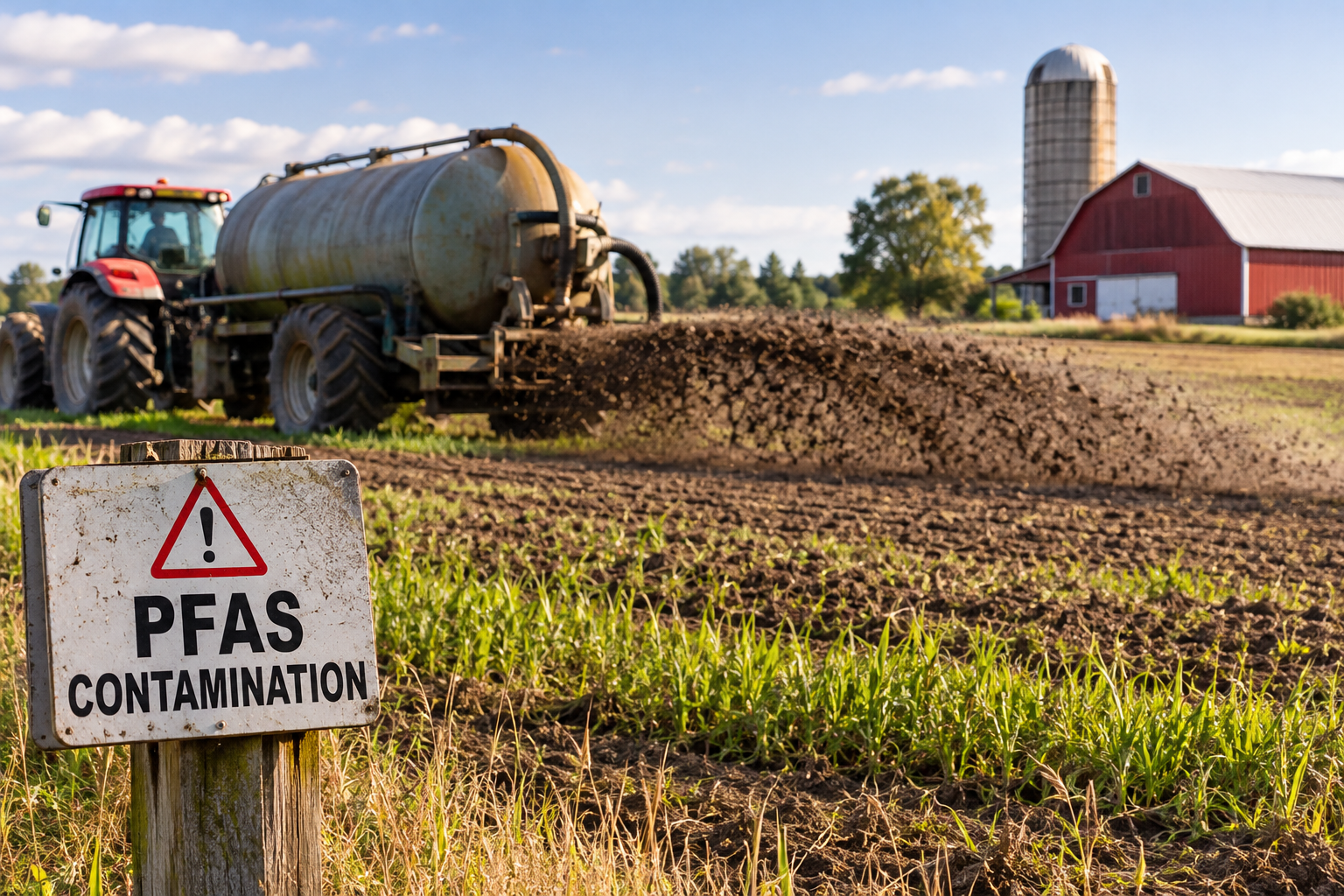
    Welcome to Earth Reform. Today we look at forever chemicals, known as PFAS, and how they end up on farms. The route runs through something most of us never think about: the sludge left over from sewage treatment, which is often spread on fields as fertilizer. In Maine, that led to contaminated milk, beef and crops, and some farms closed. We will look at what happened, what the health science says, how Canada and Ontario compare, and what can be done.

    What PFAS are and why they never really go away

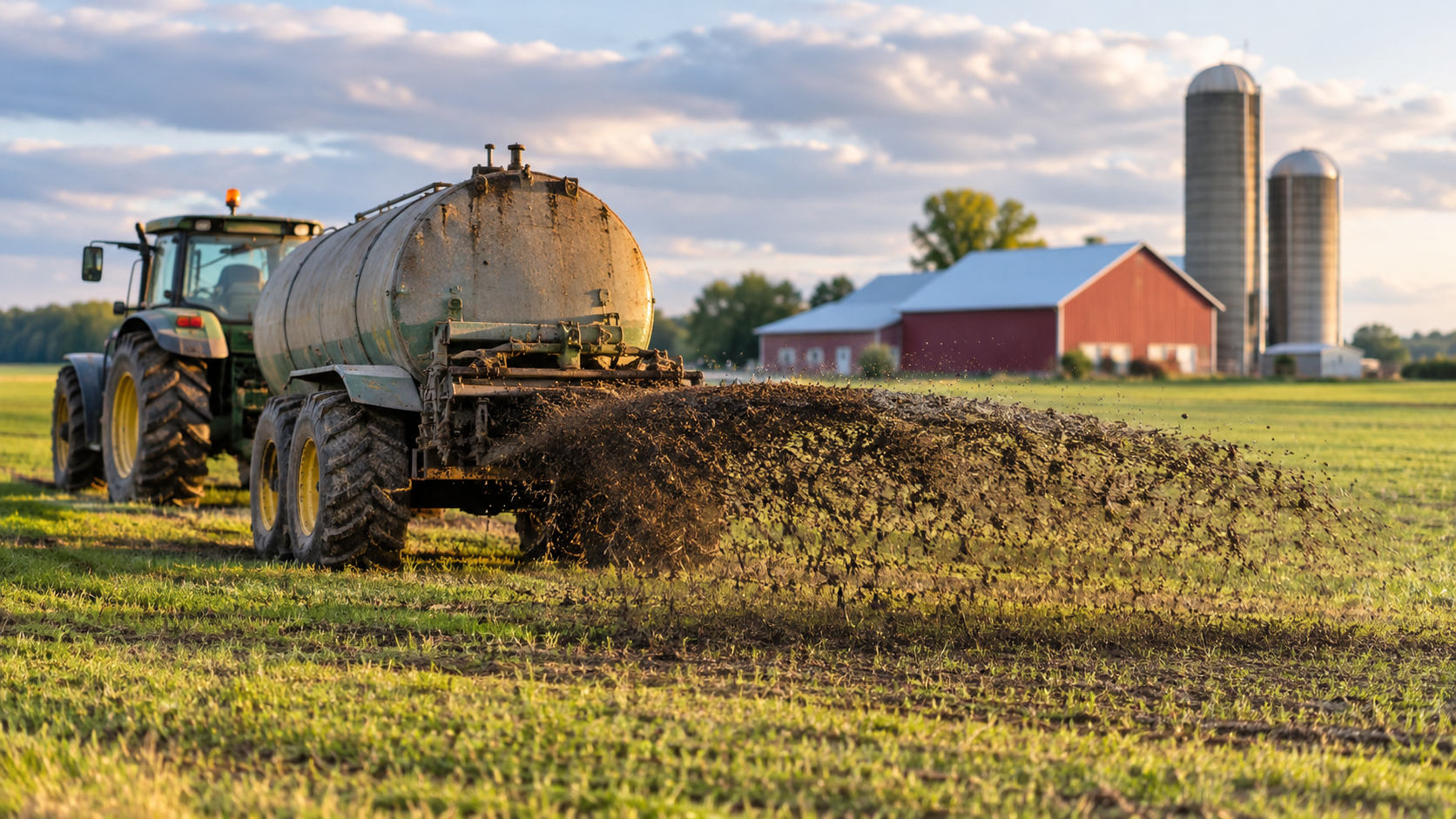
    Agricultural farmland and soil affected by PFAS forever chemicals in biosolids

    PFAS is short for per- and polyfluoroalkyl substances, a family of thousands of human-made chemicals. [2] They are used in firefighting foams, food packaging, cosmetics, pesticides and textiles, among other products. [1] Many of them break down extremely slowly in nature, which is why they are called forever chemicals.

    The results are everywhere. Canada’s federal assessment reports PFAS throughout the country, including in places far from any known source. [1] Certain PFAS have been found in the blood of about 98% of Canadians, although levels of the best-known ones have been falling. [3] Researchers say the main routes into the general population are food, drinking water and house dust. [2] Some of these compounds stay in the body for years. [2]

    This article looks at one route in particular: how forever chemicals reach the food we grow.

    How they reach farms

    The route that has caused the most trouble is sewage sludge. Wastewater treatment plants were not designed to remove PFAS, so the chemicals end up in the leftover solids. [4] Those solids, called biosolids, are widely spread on farm fields as fertilizer because they supply nutrients and organic matter. [18] In Maine, farmers relied on sludge from local treatment plants for years to support their crops. [7]

    PFAS get into sludge because homes, businesses and industry all send wastewater to the same plants. Some of Maine’s problem was likely caused by industrial sludge in the mix. [6] Canada’s federal report also lists releases into wastewater systems, composting of food packaging that contains PFAS, and land application of biosolids as ways these chemicals reach the environment. [1] Maine’s health agency adds that farms can also be contaminated through air and water. [5]

    Once the chemicals are in the soil, they do not stay put. In Maine, testing showed that PFAS had already seeped into drinking-water wells and crop roots. [7]

    Livestock, crops and milk: what has been found

    Agricultural farmland and soil affected by PFAS forever chemicals in biosolids

    The best-documented case is Maine. Researchers from the Maine Centers for Disease Control studied a dairy farm whose soil had been contaminated by past sludge spreading. They tracked how PFOS, one of the best-known PFAS, moved from soil into grass grown for feed. [8] From there it moves into the animals, and then into milk and beef. [8]

    The scale was serious. Some Maine dairy milk tested at about 30 times the safety threshold, among the highest levels ever recorded in food. [11] Contamination was found on more than fifty farms. [11] Maine set action levels for PFOS in cow’s milk in 2017 and in beef in 2020, to decide when products cannot be sold. [5] In 2019, a dairy farm that had been in business for over a century closed because it could not get its levels low enough. [7]

    Many farms found ways to keep going. Only five of the more than sixty contaminated Maine farms had to shut down, according to one account, and one farm that switched from grass for cattle to growing grain appears to have reduced the problem, because the grain stalks seem to protect the harvested part of the plant. [10]

    The US Environmental Protection Agency’s modelling points to the same pathways. It found that contaminated sludge could lead to excess risk through drinking water, milk, beef, eggs and some fruits and vegetables. [13]

    Known and suspected health effects in humans

    What is known. The most authoritative review is a 2022 report from the US National Academies of Sciences, Engineering, and Medicine. It found sufficient evidence linking PFAS exposure to four outcomes: a weaker antibody response to vaccines, abnormally high cholesterol, slower growth of babies before and after birth, and kidney cancer in adults. [14] These are statistical associations in groups of people, not a guarantee for any one person. In one study, people with the highest blood levels of PFOA had more than double the kidney cancer risk of those with the lowest. [4]

    What is suspected. The evidence is weaker, which the report calls suggestive, for breast cancer, testicular cancer, thyroid problems, ulcerative colitis, high blood pressure in pregnancy and changes in liver enzymes. [4][14] Studies in laboratory animals link certain PFAS to reproductive, developmental, hormone, liver, kidney and immune effects. [16]

    Why levels in the blood matter. The report advised that people with PFAS blood levels between 2 and 20 nanograms per milliliter may face a potential for adverse effects, especially sensitive groups such as pregnant women. [15]

    What is not known. Most studies look at a small number of well-known PFAS, yet people are exposed to many at once, and Canada’s federal assessment notes that combined exposure may add up in ways that are not yet understood. [23] The National Academies also called for more research on gaps ranging from effects on the nervous system to bone density. [4]

    The human cost: farming families and the food we eat

    Farmers carried the first and heaviest cost. In Maine, several farms discovered unsafe PFAS levels in milk and beef after spreading sludge they had been told would help their soil. Some had to dump milk and cull herds, and some shut down entirely. [9]

    Farm families may also face a personal health risk. In its January 2025 draft risk assessment, the US EPA found that acceptable risk thresholds may be exceeded in some modelled scenarios for a farm family when sludge containing just 1 part per billion of PFOA or PFOS is spread on land. [22] That assessment focused on people who live on or near affected farms or rely mainly on their products. It did not assess the general population, who typically eat a varied diet. [12] So the finding is about concentrated exposure, and it says little either way about ordinary grocery shopping.

    For everyone else, the issue is the background load. Food is one of the main ways PFAS enter the general population, alongside drinking water and house dust. [2] Farm contamination is one entry point into that load, and it is one that can be controlled.

    The Canadian picture

    Canadian farms use a lot of sludge. Federal data cited by the National Observer show that Canadian farmers applied over 500,000 tonnes to their fields in 2020, and the same report identifies Ontario as the province that applied the most. [17] At the time of that report, Environment and Climate Change Canada said it had no measures in place to track PFAS in groundwater or farm soils. [17]

    The Ontario evidence so far is more reassuring than Maine’s. A University of Guelph project that sampled Ontario biosolids and fields found PFAS in the biosolids, but no significant difference in soil concentrations between fields that received them and fields that did not. [18] The lead researcher, Ryan Prosser, says municipalities in Ontario do a fairly good job of source control, but he still believes the issue is worth watching. [18]

    Federal rules have also tightened. Since October 18, 2024, the Canadian Food Inspection Agency enforces an interim standard: biosolids sold or imported in Canada as commercial fertilizer must contain less than 50 parts per billion of PFOS, which is used as a marker for PFAS. [19] At least 92% of Canadian biosolids already pass. [19] The agency covers import and sale, while the provinces regulate use and disposal. [24] Separately, new federal rules scheduled to take effect on June 30, 2026 prohibit the manufacture, use, sale and import of certain PFAS, including PFOS, PFOA and long-chain PFCAs, with limited exceptions. [20]

    On food, an older federal survey (2013 to 2016) found no detectable PFOA or PFOS in any of 1,418 food samples, at a detection limit of 0.25 parts per billion. [3] That is reassuring, but the data are about a decade old and cover only two PFAS.

    Where a fix is obvious: stop it at the source

    The clearest lesson from Maine is that stopping PFAS at the source works better than cleaning up afterward. Michigan sharply cut levels of one PFAS in its biosolids by requiring upstream industries to reduce what they send to treatment plants. [6] The US EPA’s notice describes state pretreatment programs that cut PFOS in sewage sludge by 98%. [13] Canada’s food inspection agency has made the same point, saying contamination can be managed through source controls and through how biosolids are used. [25]

    Without source control, the costs land on farmers and utilities. Maine’s ban on spreading sludge pushed the material into landfills. [7] One utility there is developing a thermal facility to destroy PFAS in sludge and produce PFAS-free biochar. [11]

    This is where manufacturer responsibility fits naturally, although this part is my suggestion rather than a sourced finding. PFAS reach wastewater from industrial discharges and consumer products, so producer-pays cleanup funds and incentives for PFAS-free substitutes would target the origin of the problem. British Columbia has already taken the liability route, filing a class-action lawsuit against PFAS manufacturers in 2023. [21]

    To sum up: PFAS collect in sewage sludge, and when that sludge is spread on farmland they can move into soil, crops, livestock, milkand beef. The strongest evidence of harm links PFAS to weaker vaccine response, high cholesterol, lower birth weight and kidney cancer. Farm families face the greatest exposure, and the evidence for ordinary shoppers is less clear. The encouraging part is that stopping PFAS at the source works. Thank you for joining us at Earth Reform. The sources for everything in this article are listed below.

    Sources

    1. Environment and Climate Change Canada and Health Canada, State of Per- and Polyfluoroalkyl Substances (PFAS) Report, March 2025. https://www.canada.ca/en/environment-climate-change/services/evaluating-existing-substances/state-per-polyfluoroalkyl-substances-report.html
    2. Canadian PFAS biomonitoring study, Environmental Health, 2024. https://ehjournal.biomedcentral.com/counter/pdf/10.1186/s12940-024-01085-z.pdf
    3. Canadian Food Inspection Agency, PFOA and PFOS in selected foods, April 2013 to March 2016. https://publications.gc.ca/collections/collection_2026/acia-cfia/A104-706-2026-eng.pdf
    4. Science News, “Forever chemicals may pose a bigger risk to our health than scientists thought.” https://www.sciencenews.org/article/pfas-forever-chemicals-health-risk-water
    5. Maine CDC, “PFAS and agriculture.” https://www.maine.gov/dhhs/mecdc/healthy-living/health-and-safety/pfas-in-maine/pfas-and-agriculture
    6. Maine Public, “Our sewage often becomes fertilizer. Problem is, it’s tainted with PFAS.” https://www.mainepublic.org/2023-04-10/our-sewage-often-becomes-fertilizer-problem-is-its-tainted-with-pfas
    7. Sentient Media, “Maine was first to ban spreading PFAS-contaminated sludge on farmland. Now sludge is filling up landfills.” https://sentientmedia.org/maine-sand-now-sludge-is-filling-up-landfills/
    8. Maine CDC, “Maine CDC advances understanding of PFAS in crops grown for livestock feed,” 2024. https://www.maine.gov/dhhs/blog/maine-cdc-advances-understanding-pfas-crops-grown-livestock-feed-2024-11-06
    9. Sentient Media, “PFAS levels in sewage sludge put New York’s dairy and meat industry at risk.” https://sentientmedia.org/pfas-levels-in-sewage-sludge-put-new-yorks-dairy-and-meat-at-risk/
    10. The New Republic, “One state’s war on forever chemicals in milk.” https://newrepublic.com/article/187106/pfas-milk-maine-texas-biosolids-sewage
    11. Kleinman Center for Energy Policy, “Sewage sustainability: policies to balance PFAS mitigation and nutrient recycling.” https://kleinmanenergy.upenn.edu/research/publications/sewage-sustainability-policies-to-balance-per-and-polyfluorinated-alkyl-substance-pfas-mitigation-and-nutrient-recycling/
    12. US EPA, “Draft sewage sludge risk assessment for PFOA and PFOS: information for farmers,” January 2025. https://aglaw.psu.edu/wp-content/uploads/2025/01/03-Fact-Sheet-Farmers-Biosolids-1.14.25.pdf
    13. Federal Register notice summary, EPA draft sewage sludge risk assessment, January 2025. https://policyrisk.com/federal-register/2025-00734
    14. Environmental Health News, report on the National Academies PFAS guidance. https://www.ehn.org/pfas-testing-needed-2657763614/make-pfas-testing-available
    15. The New Lede, “PFAS testing needed for people with elevated exposures, US science advisors warn.” https://www.thenewlede.org/?p=864
    16. Health Canada, “Per- and polyfluoroalkyl substances (PFAS) in Canadians.” https://www.canada.ca/en/health-canada/services/environmental-workplace-health/reports-publications/environmental-contaminants/human-biomonitoring-resources/per-polyfluoroalkyl-substances-canadians.html
    17. National Observer, report on PFAS in Canadian sewage sludge. https://www.nationalobserver.com/node/31435
    18. Better Farming, “Are biosolids a forever chemical risk?” https://www.betterfarming.com/magazines/better-farming-ontario/featured-articles/are-biosolids-a-forever-chemical-risk
    19. Canadian Food Inspection Agency, notice to industry on the PFAS interim standard, June 2024. https://inspection.canada.ca/en/plant-health/fertilizers/notices-industry/notice-industry-implementation-interim-standard-and-polyfluoroalkyl-substances-pfas-commercial
    20. Canadian Water Network, “Canada is tightening its approach to PFAS,” June 2026. https://cwn-rce.ca/2026/06/24/canada-is-tightening-its-approach-to-pfas/
    21. New West Record, “Canadian regulators lag behind US after harmful forever chemicals found in fertilizer, say experts.” https://www.newwestrecord.ca/top-stories/canadian-regulators-lag-behind-us-after-harmful-forever-chemicals-found-in-fertilizer-say-experts-10080420
    22. Association of State Drinking Water Administrators, summary of the EPA draft risk assessment. https://asdwa.org/2025/01/24/epa-publishes-draft-risk-assessment-for-pfas-in-biosolids
    23. Environment and Climate Change Canada and Health Canada, Updated Draft State of PFAS Report, July 2024. https://www.canada.ca/en/environment-climate-change/services/evaluating-existing-substances/updated-draft-state-per-polyfluoroalkyl-substances-report.html
    24. Canadian Food Inspection Agency, notice to industry, May 2023. https://inspection.canada.ca/en/plant-health/fertilizers/notices-industry/2023-05-19
    25. Canadian Food Inspection Agency, news release, May 2023. https://www.canada.ca/en/food-inspection-agency/news/2023/05/the-canadian-food-inspection-agency-takes-action-to-address-forever-chemicals-in-the-environment.html

    Earth Reform Logo

    Subscribe To Receive Our Latest Content!

  • The Tire Chemical Killing Salmon

    The Tire Chemical Killing Salmon

    Welcome to Earth Reform. Today we look at a chemical found in almost every tire on the road. When it rains, it washes off the pavement and into streams, and it can kill salmon within hours. The same family of chemicals has also been found in human urine, blood and spinal fluid, and scientists are still working out what that means for our health. We will cover what is known, what is only suspected, what is happening in Canada, and what can be done about it.

    The chemical in every tire

    Every tire on the road is built to fend off a quiet enemy: ozone. This reactive form of oxygen in the air attacks rubber and makes it crack. To slow the damage, manufacturers mix an antioxidant called 6PPD into almost every car tire. [5] It works well, and it has been in use for decades.

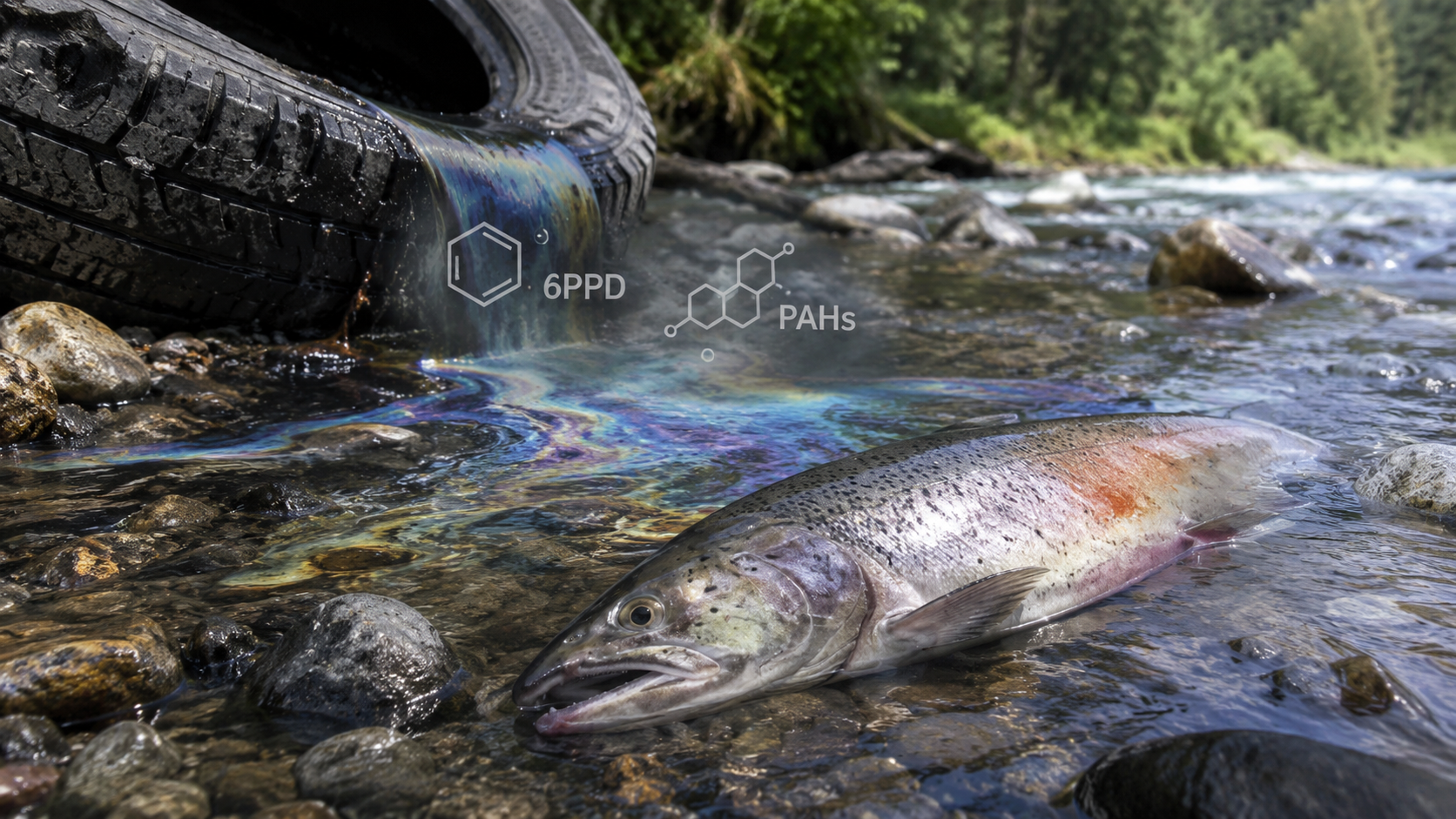
    The trouble starts after the tire is on the road. As it rolls, it sheds tiny particles of rubber. The 6PPD inside those particles reacts with ozone, which forms when vehicle exhaust meets sunlight, and turns into a different molecule called 6PPD-quinone. [2] Scientists did not identify that molecule until 2020. [1]

    That makes this story different from a factory spill or a leaking pipe. It is a steady, everyday release that comes from ordinary driving. Anyone who drives, rides a bus, or lives near a road is part of the picture.

    The salmon die-offs

    Every fall, more than half of the coho salmon that return to Puget Sound’s urban streams die before they can spawn. In some streams, none survive. [3] For years no one could explain it. After heavy autumn rains, researchers watched healthy coho swim erratically and then die within hours. [2] Scientists ruled out warm water, low oxygen and known pollutants such as zinc. [3]

    The breakthrough came when a team from the University of Washington Tacoma and Washington State University showed that stormwater alone could reproduce the symptoms, and that a solution made from tire wear particles was highly toxic to salmon. [3] Chemists then followed the toxic fractions through step after step of separation until a single molecule was left: 6PPD-quinone. [1]

    The numbers explain why it is so dangerous. In roadway runoff and storm-affected creeks on the US West Coast, the team measured 6PPD-quinone at anywhere from below 0.3 to 19 micrograms per liter. The concentration that killed half the coho in testing was only 0.8 micrograms per liter. [1] A microgram per liter is one part per billion, about the same as one drop of ink in a backyard swimming pool.

    The problem is not limited to Seattle. The same chemical turned up in runoff from Los Angeles and in creeks around San Francisco Bay. [6] Coho are also unusually sensitive. Chum salmon, for example, are much less affected. [7] Researchers even found that roughly one coho in thirty seemed largely unaffected, which they nicknamed “super-coho.” [4] Because coho react so strongly to runoff, scientists describe them as a sentinel species, a “canary in the coal mine” for roadway pollution. [2]

    How it reaches people

    Salmon meet 6PPD-quinone in the water. People can meet it in several other ways. Researchers list the likely routes as swallowing soil, sediment, dust or water, breathing in dust, and skin contact. [8] 6PPD itself has been found in soils, sediments, household dust and human urine. [9]

    It also travels to places you might not expect. Rubber from recycled tires is used on playfields and recreational trails, and runoff from those surfaces can carry 6PPD-quinone into streams. [10]

    Then there is food. In a laboratory experiment, lettuce plants took up 6PPD and 6PPD-quinone through their roots and moved them into their leaves. [11] That test used a much higher concentration than you would find in a normal garden, so it shows that uptake is possible, not that it is happening at that level. A separate study tested commercial leafy vegetables and found six tire-derived compounds in them. Its authors note that other produce may carry more and that how these chemicals travel from road to food still needs study. [12]

    6PPD tire chemical killing Salmon exposed to stormwater runoff from roads

    Known and suspected health effects in humans

    What is known. People carry this chemical. Studies in China have found 6PPD-quinone in human urine, blood and cerebrospinal fluid, the fluid around the brain and spinal cord. [13] A study in Guangzhou, China, found higher urine levels in pregnant women than in other adults and children. [14] Researchers list three routes into the body: breathing, eating or drinking, and skin contact. [15] As of 2024, no US biomonitoring studies were available. [8]

    What is suspected. Most evidence of harm comes from animals and cells, not from people. In mice, swallowing 6PPD-quinone caused liver damage, with inflammation and disrupted fat and sugar metabolism. [16] In a lab test on human liver cell lines, 6PPD-quinone looked more harmful than its parent chemical, 6PPD. [16] Scientific reviews also point to nervous system and immune effects in model organisms, and to liver, intestinal and reproductive damage in laboratory studies. [15][17]

    An early human signal. A 2026 hospital study in China compared 283 people newly diagnosed with colorectal cancer to 515 healthy people. Higher urine levels of 6PPD-quinone and two related compounds went with higher odds of colorectal cancer. [17] This is an association only. Urine was collected within three days after diagnosis, so the study cannot show that the chemical caused the cancer, and the authors describe the link as new. It needs to be tested in other populations before anyone treats it as established. [17]

    What is not known. No human disease has been proven to be caused by 6PPD-quinone. A March 2026 review from a UK professional association says that detection in the body shows exposure but not harm, and that long-term human data are limited. [18] Researchers also do not yet know how the toxicity of 6PPD relates to that of 6PPD-quinone, and the data are too thin to estimate one from the other. [8]

    What it means for us

    There is no single polluter here to blame, and drivers cannot opt out. The US Tire Manufacturers Association says it knows of no new motor vehicle tire without 6PPD. [20] Environmental lawyers in Canada note that all tires contain either 6PPD or another chemical from the same family. [21] So this is not about individual choices. It is about what is built into a product nearly everyone uses.

    That has three practical consequences.

    • Food and water. Salmon are a food source and, for First Nations, a cultural and ceremonial one. [24] Coho also act as an early warning for a wider pollution problem. [2] Lab work shows that crops can absorb tire chemicals. [11][12] How much reaches people through food is still an open question.
    • Health. The exposure is real, and the evidence of harm is still early. Lab studies point to the liver, gut and reproductive system as the areas of most concern. [15][16][17]
    • Money. When pollution is not stopped at the source, public budgets pay for cleanup. In 2022 the Washington legislature set aside $500 million over 16 years for stormwater retrofits, and the state transportation department is planning a $6 million project to treat runoff from one Seattle bridge, due in 2028. [19]

    The Canadian picture

    Canadian roads feed the same problem. A commercial lab presented data from coastal British Columbia and nearby regions at an industry conference, reporting 6PPD-quinone in 94% of water samples, at up to 740 nanograms per liter. [5] The concentration that killed half of exposed coho in the original study was 0.8 micrograms per liter, which is 800 nanograms per liter. [1] So the highest readings sat close to a lethal level. Environment and Climate Change Canada’s own planning document says monitoring has detected 6PPD-quinone in Canadian waters at levels that may concern coho. [22]

    On policy, Canada’s 2018 screening of 6PPD found low concern, but it did not look at 6PPD-quinone, which scientists had not yet identified. [22] In February 2024 the law charity Ecojustice, acting for Raincoast, Watershed Watch Salmon Society and the Pacific Salmon Foundation, asked Ottawa to assess 6PPD. [23] On April 30, 2024 the Minister of Environment agreed to add it to the priority list, and the groups noted this was the first successful use of that request provision in the Canadian Environmental Protection Act. [9][23] By the end of 2024 the same groups said the federal work plan gave no firm timeline beyond starting the assessment in fall 2024. [26] A trade report in February 2026 still described the assessment as pending, with regulation possible if the chemical is found toxic. [27]

    There is also a human and cultural side. A petition to the Auditor General of Canada argues that weak coho stocks may limit First Nations’ ability to meet their food, social and ceremonial fishing needs. [24]

    There is a Canadian bright spot too. Researchers tested a full-scale rain garden in Vancouver and found it kept more than 90% of 6PPD-quinone out of streams under typical storm conditions. [25]

    Few environmental problems have two such clear places to intervene: the tire itself, and the runoff path from road to stream.

    A fix that fits: tire makers

    6PPD tire chemical killing Salmon exposed to stormwater runoff from roads

    At the source. The tire industry says 6PPD protects tires from ozone cracking, a real safety issue, and that no commercially available alternative yet matches its safety and performance. [20] It has also acted. After California listed 6PPD tires as a priority product in October 2023, a consortium of 36 tire makers screened more than 60 candidates and advanced seven for further study. [20] The association’s website currently gives 2029 as the due date for its final report to California regulators. [20]

    Two cautions apply. Some of the candidates belong to the same chemical family as 6PPD, which is a known risk of swapping one problem for another. [20][21] And Washington’s Department of Ecology concluded that it was hard to tell whether any alternative would actually be safer. [25]

    This is where incentives look like a natural fit, although this part is my suggestion rather than a sourced finding. The slow, expensive steps are shared safety testing, toxicity testing and retooling. Public money for shared testing, tax credits for early adopters of a verified safer additive, or procurement rules for government fleets would speed those steps without lowering safety standards. That could be a strong follow-up article.

    Along the path. Rain gardens and engineered soil filters work. In the Vancouver study, they kept over 90% of 6PPD-quinone out of streams in typical storms. [25] In King County, Washington, improved soil mixes always brought 6PPD-quinone below the state’s proposed safe level for aquatic life. [29] The tire industry also backs interim steps: street sweeping, pavement that sheds fewer particles, and keeping tires properly inflated. [28]

    The encouraging point is that 6PPD is not a forever chemical. Once tires containing it leave the road, the damage stops. [21] That makes this one of the more solvable problems in environmental health.

    To sum up: 6PPD keeps tires from cracking, but when it reacts with ozone it forms 6PPD-quinone, which kills coho salmon at tiny concentrations. It has been found in people, and early studies raise questions about the liver, the gut and more. No human disease has been proven to be caused by it yet. The encouraging part is that this is a solvable problem, both at the tire and along the path the rain takes. Thank you for joining us at Earth Reform. The sources for everything in this article are listed below.

    Sources

    1. Tian et al., “A ubiquitous tire rubber-derived chemical induces acute mortality in coho salmon,” Science, 2021. https://doi.org/10.1126/science.abd6951
    2. Water Environment Federation, “Experts identify long sought stormwater contaminant behind salmon deaths.” https://stormwater.wef.org/2021/01/experts-identify-long-sought-stormwater-contaminant-behind-salmon-deaths/
    3. Washington State University News, “Tire-related chemical largely responsible for adult coho salmon deaths in urban streams.” https://news.wsu.edu/?p=210117
    4. Estuary News, “West Coast salmonids all tired out.” https://old.estuarynews.org/west-coast-salmonids-all-tired-out
    5. ESAA / SGS conference abstract, “6-PPD Quinone: Occurrence and Best Practices in Measurement.” https://esaa.org/wp-content/uploads/2024/02/SMART4.pdf
    6. US National Park Service, “Scientists discover silent threats to Pacific Coast salmon populations.” https://www.nps.gov/articles/000/scientists-discover-silent-threats-to-pacific-coast-salmon-populations.htm
    7. Earth.com, “What is killing coho salmon in urban streams?” https://www.earth.com/animals/what-is-killing-coho-salmon-in-urban-streams/
    8. Interstate Technology and Regulatory Council, “6PPD and 6PPD-quinone.” https://6ppd.itrcweb.org/effects-characterization-and-toxicity/
    9. Ecojustice, “Feds to investigate tire chemical implicated in mass salmon deaths.” https://ecojustice.ca/news/feds-to-investigate-tire-chemical-implicated-in-mass-salmon-deaths-but-urgent-action-needed-environmental-groups-react
    10. American Bar Association, “Tire-driven stormwater toxicity,” 2022. https://www.americanbar.org/groups/environment_energy_resources/publications/trends/2022-2023/september-october-2022/tire-driven-stormwater-toxicity/
    11. Castan et al., “Uptake, metabolism, and accumulation of tire wear particle-derived compounds in lettuce.” https://services.phaidra.univie.ac.at/api/object/o:1639158/download
    12. Sherman et al., “Uptake of tire-derived compounds in leafy vegetables and implications for human dietary exposure,” Frontiers in Environmental Science, 2024. https://doi.org/10.3389/fenvs.2024.1384506
    13. “Potential human health risk of the emerging environmental contaminant 6-PPD quinone,” Science of the Total Environment. https://www.sciencedirect.com/science/article/abs/pii/S0048969724052070
    14. “6PPD and 6PPD quinone in paired human plasma and urine from Tianjin, China,” Journal of Hazardous Materials. https://www.sciencedirect.com/science/article/abs/pii/S0304389424013979
    15. “Environmental and Human Health Risks of 6PPD and 6PPDQ: Assessment and Implications.” https://www.ncbi.nlm.nih.gov/pmc/articles/PMC12567608/
    16. “Effects of 6PPD-Quinone on Human Liver Cell Lines.” https://www.ncbi.nlm.nih.gov/pmc/articles/PMC11209231/
    17. “Associations Between Human Exposure to Substituted p-Phenylenediamine-Derived Quinones and Colorectal Cancer Risk,” Toxics, 2026. https://doi.org/10.3390/toxics14080705
    18. AGS, “6PPD-Quinone from tyres to streams,” March 2026. https://www.ags.org.uk/2026/03/6ppd-quinone-6ppd-q-from-tyres-to-streams-ecotoxicology-and-regulation-in-the-united-states-united-kingdom-and-european-union/
    19. KUOW, “Every tire produces a chemical that kills coho salmon. Can scientists pump the brakes?” https://www.kuow.org/stories/every-tire-produces-a-chemical-that-kills-coho-salmon-can-scientists-pump-the-brakes
    20. US Tire Manufacturers Association, “6PPD and tire manufacturing.” https://www.ustires.org/6ppd-and-tire-manufacturing
    21. Ecojustice, “What is 6PPD and what is it used for?” https://ecojustice.ca/news/what-is-6ppd-and-what-is-it-used-for/
    22. Government of Canada, “Plan of Priorities: substances prioritized for assessment under CEPA.” https://www.canada.ca/en/environment-climate-change/services/canadian-environmental-protection-act-registry/implementing-modernized-cepa/plan-of-priorities-landing-page/priority-substances.html
    23. Environment and Climate Change Canada, response to the request to assess 6PPD, April 2024. https://ecojustice.ca/wp-content/uploads/2024/05/Ecojustice-Response-to-Request-to-Assess-6PPD-under-section-76-of-CEPA.pdf
    24. Office of the Auditor General of Canada, petition “Effects of 6PPD tire rubber antioxidant on salmon and mitigation.” https://www.canada.ca/en/auditor-general/environmental-petitions/environmental-petitions-catalogue/effects-of-6ppd-tire-rubber-antioxidant-on-salmon-and-mitigation.html
    25. “Bioretention cells provide a 10-fold reduction in 6PPD-quinone mass loadings to receiving waters,” Environmental Science and Technology Letters. https://pmc.ncbi.nlm.nih.gov/articles/PMC10339781/
    26. Raincoast Conservation Foundation, “Urge Canada to regulate 6PPD,” December 2024. https://www.raincoast.org/2024/12/urge-canada-to-regulate-6ppd/
    27. Environmental Science and Engineering Magazine, “U.S. trial concludes over tire chemical impacts on endangered fish,” February 2026. https://esemag.com/water/us-trial-tire-chemical-impacts-endangered-fish/
    28. European Rubber Journal, “US tire group optimistic over search for 6PPD alternatives,” August 2024. https://www.european-rubber-journal.com/article/2095940/us-tire-association-optimistic-over-6ppd-alternatives-efforts
    29. King County Science and Technical Support Section, 6PPD-quinone bioretention study report, June 2024. https://www.ezview.wa.gov/Portals/_1962/Documents/6ppd-bmp/King_County_Lab_6PPDQ_Study_Report_Final%20(1).pdf

    Earth Reform Logo

    Subscribe For Our Latest Reports

    Listen to an educational dialogued podcast on this article. Click below.