Category: Biochemistry

  • The Superbug Factory: How Drug Manufacturing Pollution Breeds Antibiotic Resistance

    The Superbug Factory: How Drug Manufacturing Pollution Breeds Antibiotic Resistance

    Welcome. Today’s article starts with a number that sounds like a typo.

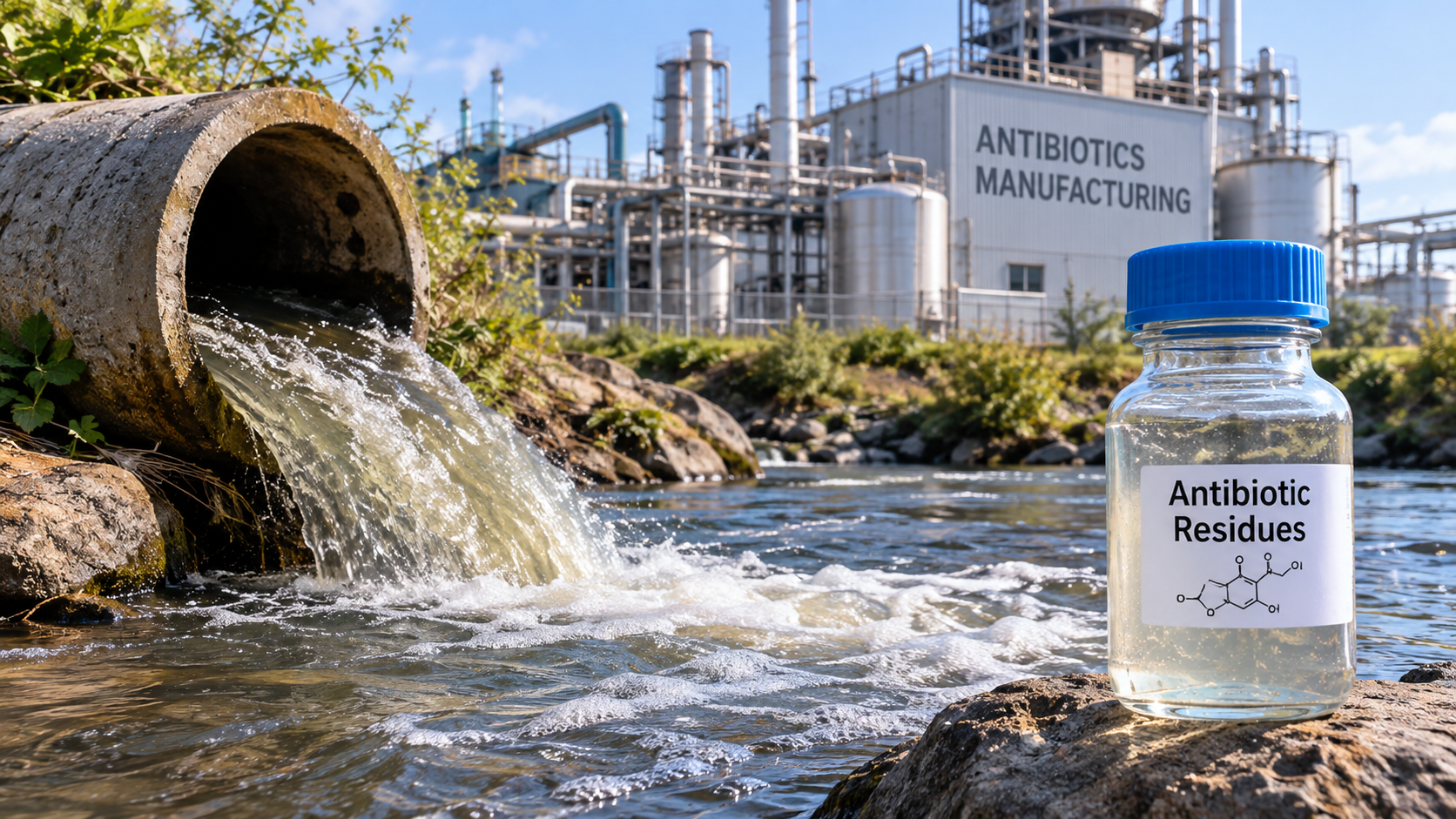
    In 2007, Swedish scientists tested the wastewater leaving a treatment plant near Hyderabad, India. The plant served about ninety drug factories. The antibiotic ciprofloxacin in that water was more than a thousand times higher than the level that is toxic to some bacteria. [1]

    Stop and think about that. Factories making medicine designed to kill bacteria were releasing it into local waterways at levels where surviving bacteria are forced to adapt.

    When we talk about superbugs, we usually blame two things: doctors who overprescribe and farms that overuse antibiotics. Both are real. But there is a third source that most people have never heard of: the pollution created when antibiotics are made.

    In this episode, we’ll look at what the science shows, where the evidence is strong, where it is still uncertain, and why a problem concentrated in a few industrial zones thousands of kilometres away can end up in a hospital near you.

    The Threat We Already Know About

    Antibiotic resistance is what happens when bacteria stop responding to the drugs meant to kill them. It can arise when a bacterium’s own DNA mutates, or when it picks up resistance genes from another bacterium, even one of a different species. [4] Every time antibiotics are used, bacteria that happen to survive get a head start. The more often and the more widely bacteria are exposed, the faster resistance spreads.

    The human toll is already large. A landmark study in The Lancet estimated that in 2019, about 4.95 million deaths worldwide were associated with drug-resistant bacterial infections. Of those, 1.27 million were directly attributable to resistance, meaning deaths that would not have occurred had those infections been drug-susceptible instead. [2] The researchers found that this burden exceeded the deaths from HIV/AIDS or malaria that year. [2]

    A follow-up analysis looked ahead. It found that resistance directly caused about 1.14 million deaths in 2021 and projected roughly 39 million cumulative deaths between 2025 and 2050 if nothing changes. [3] That works out to around 1.9 million direct deaths a year by 2050. The same analysis forecast the heaviest toll in South Asia, with an estimated 11.8 million deaths over that period. [3] The authors also noted that better care for severe infections and wider access to antibiotics could avert an estimated 92 million deaths over the same period. [3]

    For years, the policy conversation has focused on two fronts: healthcare and agriculture. But a growing number of researchers argue this is not enough. As one of the field’s leading scientists put it after the 2024 United Nations political declaration on antimicrobial resistance, a global consensus has gradually formed that action in healthcare and the animal sector alone is insufficient. [5] The environment, and in particular the factories that make the drugs, needs to be part of the picture.

    The Overlooked Source: Where Antibiotics Are Made

    Most of the world’s antibiotics and their key ingredients are produced in a small number of regions, with India and China dominant. [6] Making an antibiotic generates wastewater containing leftover drug. If that water is not treated properly, the drug goes into rivers, lakes and groundwater.

    The 2007 Hyderabad study was the first to show how extreme this can be. The researchers sampled the effluent from a treatment plant serving about 90 bulk drug manufacturers in Patancheru, a major production hub for generic drugs sold on the world market. They reported the highest drug levels ever recorded in any effluent. [1] Ciprofloxacin reached up to 31,000 micrograms per litre. [1] The team estimated that the plant released about 45 kilograms of ciprofloxacin in a single day, roughly 45,000 daily doses. [7] Larsson later described the concentrations as around a million times higher than those typically seen in ordinary sewage. [10]

    Such levels are not just a chemistry curiosity. When researchers sequenced DNA from sediments downstream of the plant, they found very high levels of resistance genes and of the genetic elements that help bacteria swap them. [8] Researchers also found drugs in nearby lakes and in wells in surrounding villages. [10] One 2009 report noted that the plant had not been able to handle all the waste it received over the years. [7]

    A subtle finding: right at the outfall, the antibiotic levels were so high that they overpowered even the resistant bugs. Scientists warned that such a hotspot could behave like a volcano, with resistance genes dispersing and settling elsewhere downstream or beyond. [9]

    What the evidence does and does not show

    This is the part to be precise about. Researchers agree that antibiotic residues clearly explain the extremely high resistance levels near some manufacturing sites. But a large 2019 study in Nature Communications found that, in most other environments, human fecal pollution is probably the main explanation for elevated resistance genes. [11] In other words, manufacturing is not the biggest driver of resistance everywhere. It is a concentrated hotspot where the pressure on bacteria is far more intense.

    The scientific uncertainty is about the next step: how often resistant bacteria bred in these hotspots reach people and cause infections. A major review concluded that the pathways and mechanisms for transfer from environmental bacteria to pathogens are still largely unclear, but that concern is growing. [4] The same review noted that excessive antibiotic emissions from manufacturing have been reported in low- and middle-income countries and other regions. [4] The responsible position is that the risk is plausible, documented at the source, and not yet fully quantified downstream.

    The Animal Side of the Story

    Factories are not the only place where antibiotics meet bacteria in large quantities. Farms are the other major one, and the animals are on the receiving end.

    A 2015 study in PNAS produced the first global map of antibiotic use in livestock. It estimated that farm animals consumed about 63,000 tonnes of antimicrobials in 2010 and projected a 67 percent rise by 2030. [12] The projection was driven by rising demand for meat and a shift from small-scale farming to large intensive operations where antibiotics are used routinely, including for disease prevention and growth promotion. [12] Two-thirds of the projected increase came from simply raising more animals, and one-third from the move to intensive systems. [12] The five countries of Brazil, Russia, India, China and South Africa were projected to see consumption rise by 99 percent, against an expected 13 percent growth in their human populations. [12]

    The study also found that pigs and chickens receive far more antibiotics per kilogram of animal than cattle: an estimated 172 and 148 milligrams per kilogram, compared with 45 for cattle. [12] These are modelled estimates built on sales data from a limited number of countries, so they should be read as a map of the trend, not a precise ledger. [12] Newer surveillance data exists and is worth checking before quoting any single figure.

    Why this is an animal welfare story too

    Routine, preventive dosing is a feature of crowded production systems. One implication, offered here as analysis rather than a finding from the study, is that routine dosing can make it possible to keep large numbers of animals in conditions that would otherwise cause disease to spread quickly. The animals bear the cost of those conditions, and the wider world bears the cost of the resistance that follows.

    There is also a human injustice thread. The study’s co-authors pointed out that roughly a billion poor people depend on livestock for survival. They typically raise animals in small backyard systems and use antibiotics only when animals are sick. As effective drugs become costlier and scarcer, these households are expected to take a disproportionate share of the consequences. [12]

    One shared pool of resistance

    Why does it matter that factories and farms are both part of the story? Because resistance does not respect boundaries. Researchers describe antibiotic resistance as a challenge involving the transfer of bacteria and genes between humans, animals and the environment. [4] The authors of the 2024 Lancet forecast likewise stressed that reducing deaths will require a combination of measures, including cutting inappropriate antibiotic use in farming and humans, infection prevention, vaccination and new antibiotics. [3] Manufacturing pollution is not a replacement for those explanations. It is a missing piece of the same puzzle.

    Why This Reaches You

    It is tempting to file this under “someone else’s problem”: a few industrial zones, far away. Three things make that comfortable view hard to defend.

    1. Resistance is already a Canadian health problem

    A 2019 expert panel report by the Council of Canadian Academies, requested by the Public Health Agency of Canada, estimated that about 26 percent of bacterial infections in Canada in 2018 were resistant to first-line antibiotics. [13] That year, about 14,000 deaths were linked to resistant infections, and around 5,400 were directly attributable to resistance. [13] Those numbers equal roughly 15 Canadians a day.

    The bill is also financial. The panel estimated that resistance cost the Canadian healthcare system about $1.4 billion and reduced GDP by about $2 billion in 2018. [13] If resistance rises to 40 percent by 2050, it projected roughly 396,000 cumulative lives lost between 2020 and 2050 and a cumulative GDP loss of about $388 billion. [13] The report added that the burden would fall unevenly across socio-demographic groups. [13]

    The global data show who is most at risk. Between 1990 and 2021, resistance-related deaths fell by more than half among children under five but rose by more than 80 percent among adults aged 70 and older. [3] Think of parents, grandparents, and anyone heading into surgery, chemotherapy or a joint replacement, all of which depend on antibiotics working.

    2. Canada depends on the same supply chain

    Generic drugs fill nearly three-quarters of all prescriptions in Canada. [14] A 2022 study by EY Canada for the Canadian Generic Pharmaceutical Association found that almost all of the active ingredients used to make generics in Canada are imported, with more than 60 percent coming from India and China. [14]

    A caution is needed. Nothing here shows that any particular drug on a Canadian pharmacy shelf came from a plant with polluted discharge. That is exactly the problem: the public, and often the buyers, cannot tell. Oversight of manufacturing sites that supply Canada leans heavily on foreign regulators, which conducted about 85 percent of the inspections, according to data reported by CTV News. [15] And the WHO described antibiotic manufacturing as a documented source of pollution that remains largely unregulated. [16]

    3. Resistance travels

    Resistant bacteria move with people, food, animals and water. One researcher commenting on the Hyderabad findings warned that such hotspots could seed resistance well beyond the immediate area. [9] The 2024 Lancet analysis also found that among Gram-negative bacteria, resistance to carbapenems, antibiotics often held back for serious infections, grew faster than resistance to any other class. [3] When the drugs we hold in reserve start failing, a resistant infection anywhere is a risk everywhere.

    That is why this is not only a story about distant communities. It is a story about a shared global resource: the ability of antibiotics to work.

    What Could Change

    The encouraging part of this story is that much of the fix sits with manufacturers, governments and the institutions that buy medicines, rather than with ordinary consumers.

    In 2024, the World Health Organization released its first global guidance on limiting antibiotic pollution from manufacturing, with targets for managing wastewater and solid waste. It is not binding, but the hope is that regulators, buyers and auditors will build it into their rules. [16] Industry has moved too. The AMR Industry Alliance and the British Standards Institution published a voluntary manufacturing standard in 2022 and launched independent certification in 2023. By May 2025, over 60 antibiotic products across 15 geographies had been certified, and the standard was updated to align with the WHO guidance. [17]

    The most interesting lever is purchasing. Healthcare buyers can reward clean production: for example, suppliers applying to the NHS England antibiotic subscription model must hold the BSI certification, and some Nordic procurement tenders also reference it. [17] Rules that favour cleaner manufacturers give companies a commercial reason to invest.

    Regulation has proven harder. In January 2020, India proposed limits on 121 antibiotics in pharmaceutical effluent, which would have been a world first. [18] But a later analysis found that after about twenty months of debate, any mention of limits had vanished from the final published rule. [19] Critics have also argued that companies should not set their own standards. [18]

    The lesson, as an analysis rather than a finding, is that mandates alone can stall when they raise costs for competitive producers. Which incentives and disincentives actually move manufacturers is now an active research question. [20] Pairing clear standards with support for treatment upgrades is a natural option to test.

    Let’s pull it together.

    Overprescribing and farm use are real drivers of superbugs, and nothing in this episode changes that. But the pollution from making antibiotics is a documented, concentrated hotspot that gets far less attention. From Hyderabad, we know that wastewater from drug factories has carried an antibiotic at more than a thousand times the level toxic to some bacteria, and that resistance genes were found downstream. What we do not yet know is exactly how often those hotspots lead to infections in people far away. That is a gap worth closing, not a reason to wait.

    The fix is within reach: clear standards for manufacturers, transparency about where our medicines are made, and purchasing rules that reward clean production.

    Next time you pick up a prescription, remember that the pill in your hand is part of a global chain, and that keeping antibiotics working is a shared project. Thanks for listening.

    Footnotes and Sources

    1. Larsson DGJ, de Pedro C, Paxeus N. Effluent from drug manufactures contains extremely high levels of pharmaceuticals. Journal of Hazardous Materials. 2007;148(3):751-755. doi:10.1016/j.jhazmat.2007.07.008. PubMed
    2. Antimicrobial Resistance Collaborators. Global burden of bacterial antimicrobial resistance in 2019: a systematic analysis. The Lancet. 2022;399(10325):629-655. doi:10.1016/S0140-6736(21)02724-0. PubMed; comparison with HIV/AIDS and malaria per the IHME summary and the Oxford summary.
    3. GBD 2021 Antimicrobial Resistance Collaborators. Global burden of bacterial antimicrobial resistance 1990-2021: a systematic analysis with forecasts to 2050. The Lancet. 2024. doi:10.1016/S0140-6736(24)01867-1. Summaries: IHME, University of Oxford, CNN via KION (age trends).
    4. Larsson DGJ, Flach C-F. Antibiotic resistance in the environment. Nature Reviews Microbiology. 2022. Full text
    5. University of Gothenburg. Swedish research on antibiotic pollution becomes UN declaration after 17 years. Link
    6. Commentary (not peer reviewed): Time for India to step up fight against antimicrobial resistance. The Week(India), 2020. The claim that India and China produce about 90 percent of the world’s antibiotics comes from this piece. Link
    7. Chemists show how waste-water contamination affects ecosystem. Nature. 2009;457:640. Link
    8. Kristiansson E, Fick J, Janzon A, et al. Pyrosequencing of antibiotic-contaminated river sediments reveals high levels of resistance and gene transfer elements. PLoS ONE. 2011;6:e17038. Listed in the reference list of Larsson DGJ, Pollution from drug manufacturing: review and perspectives, 2014;369:20130571 (doi:10.1098/rstb.2013.0571), published in Philosophical Transactions of the Royal Society B, doi:10.1098/rstb.2013.0571.
    9. Dumped drugs lead to resistant microbes. Scientific American. Link
    10. Antibiotic pollution. New Scientist, 24 May 2019 (copy hosted by the Société Française de Microbiologie). PDF
    11. Karkman A, Pärnänen K, Larsson DGJ. Fecal pollution can explain antibiotic resistance gene abundances in anthropogenically impacted environments. Nature Communications. 2019. Summary: University of Gothenburg via EurekAlert
    12. Van Boeckel TP, Brower C, Gilbert M, et al. Global trends in antimicrobial use in food animals. PNAS. 2015;112(18):5649-5654. doi:10.1073/pnas.1503141112. Summary: Princeton University
    13. Council of Canadian Academies. When Antibiotics Fail. 2019. Council summary; coverage: CIDRAP, Insurance Portal (2020-2050 projections)
    14. EY Canada for the Canadian Generic Pharmaceutical Association. Canadian Generic Pharmaceutical Importing/Manufacturing Capacity Study, 2022 (news release). PDF
    15. FDA backlog raises scrutiny of Canada’s outsourced drug inspections (reporting CTV News data). Benefits and Pensions Monitor. Link
    16. WHO issues global guidance to limit antibiotic pollution from manufacturing. CIDRAP, 2024. Link
    17. AMR Industry Alliance. Standard update, May 2025 and Responsible Manufacturing page (NHS and Nordic procurement references)
    18. ReAct. Antibiotic pollution: India scores a global first with effluent limits, 2020; Down To Earth, draft rules covering 121 antibiotics, 2020.
    19. CIDRAP-ASP. The Limit of Limits: India’s Hurdles in Regulating Antimicrobial Pollution (report summary). Link
    20. Nijsingh N, Munthe C, Larsson DGJ. Managing pollution from antibiotics manufacturing: charting actors, incentives and disincentives. Environmental Health. 2019. doi:10.1186/s12940-019-0531-1. Link

    Earth Reform Logo

    You agree to receive email communication from us by submitting this form and understand that your contact information will be stored with us.

  • Forever Chemicals on the Farm

    Forever Chemicals on the Farm

    Welcome to Earth Reform. Today we look at forever chemicals, known as PFAS, and how they end up on farms. The route runs through something most of us never think about: the sludge left over from sewage treatment, which is often spread on fields as fertilizer. In Maine, that led to contaminated milk, beef and crops, and some farms closed. We will look at what happened, what the health science says, how Canada and Ontario compare, and what can be done.

    What PFAS are and why they never really go away

    PFAS is short for per- and polyfluoroalkyl substances, a family of thousands of human-made chemicals. [2] They are used in firefighting foams, food packaging, cosmetics, pesticides and textiles, among other products. [1] Many of them break down extremely slowly in nature, which is why they are called forever chemicals.

    The results are everywhere. Canada’s federal assessment reports PFAS throughout the country, including in places far from any known source. [1] Certain PFAS have been found in the blood of about 98% of Canadians, although levels of the best-known ones have been falling. [3] Researchers say the main routes into the general population are food, drinking water and house dust. [2] Some of these compounds stay in the body for years. [2]

    This article looks at one route in particular: how forever chemicals reach the food we grow.

    How they reach farms

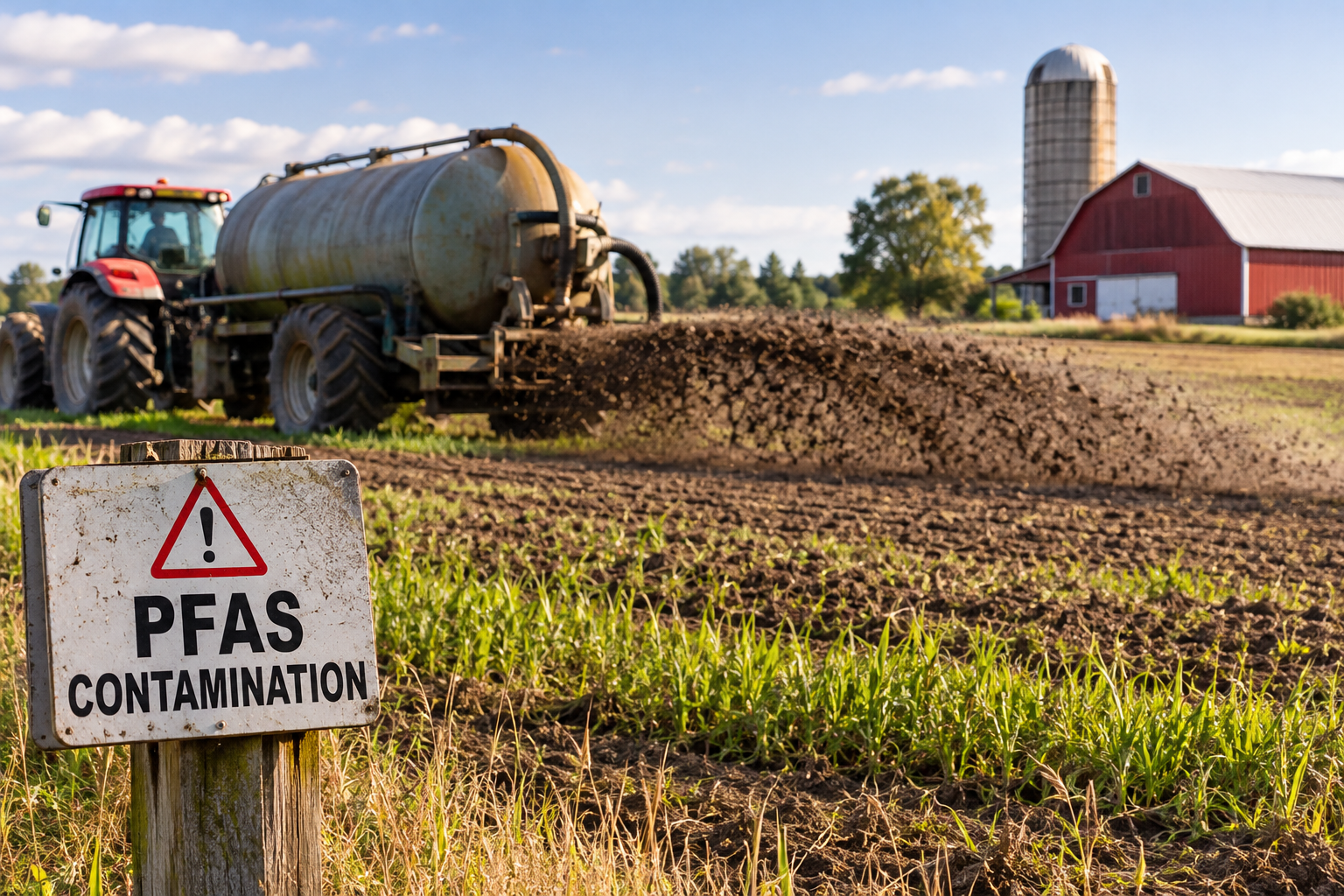
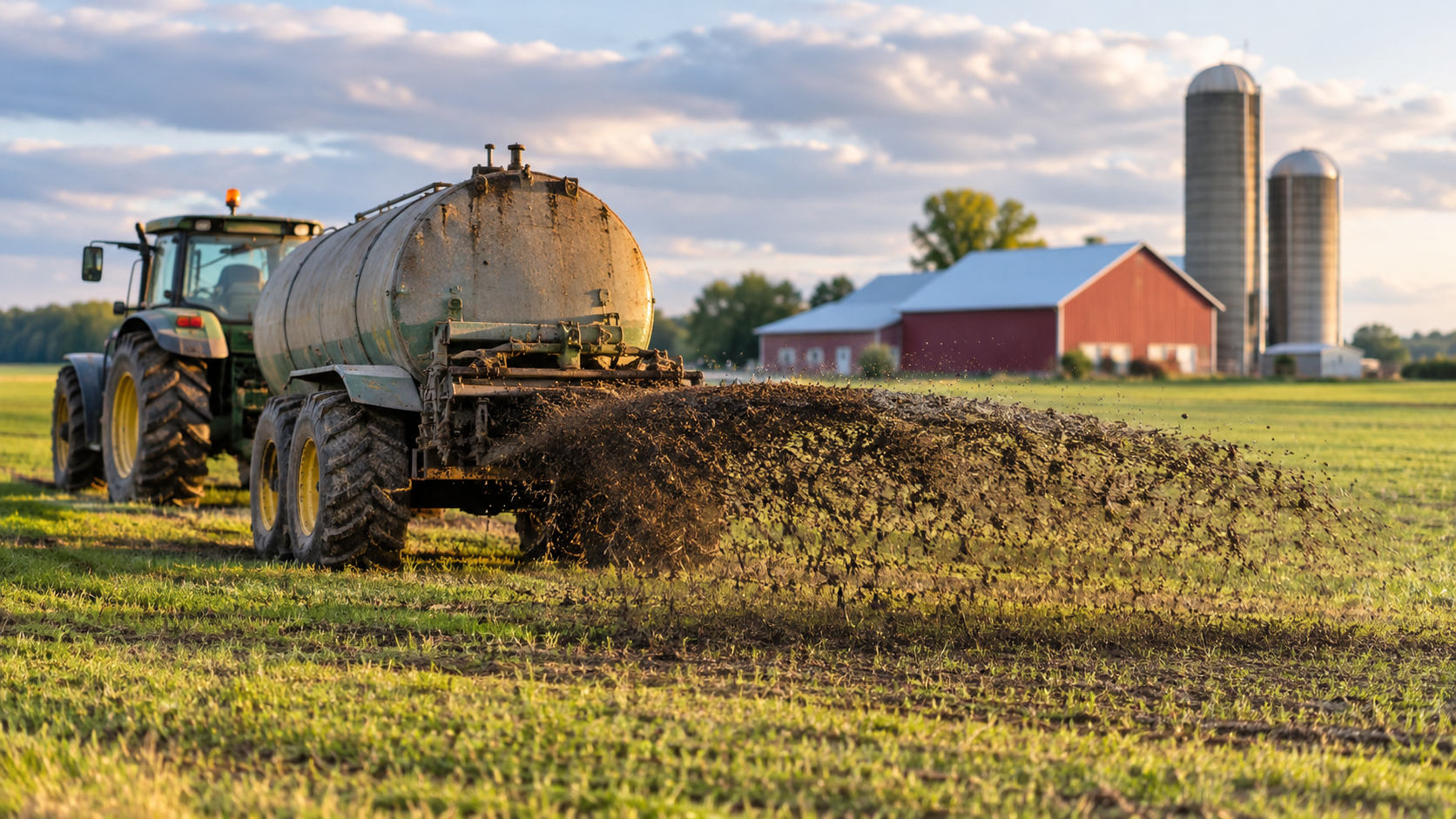
    The route that has caused the most trouble is sewage sludge. Wastewater treatment plants were not designed to remove PFAS, so the chemicals end up in the leftover solids. [4] Those solids, called biosolids, are widely spread on farm fields as fertilizer because they supply nutrients and organic matter. [18] In Maine, farmers relied on sludge from local treatment plants for years to support their crops. [7]

    PFAS get into sludge because homes, businesses and industry all send wastewater to the same plants. Some of Maine’s problem was likely caused by industrial sludge in the mix. [6] Canada’s federal report also lists releases into wastewater systems, composting of food packaging that contains PFAS, and land application of biosolids as ways these chemicals reach the environment. [1] Maine’s health agency adds that farms can also be contaminated through air and water. [5]

    Once the chemicals are in the soil, they do not stay put. In Maine, testing showed that PFAS had already seeped into drinking-water wells and crop roots. [7]

    Livestock, crops and milk: what has been found

    The best-documented case is Maine. Researchers from the Maine Centers for Disease Control studied a dairy farm whose soil had been contaminated by past sludge spreading. They tracked how PFOS, one of the best-known PFAS, moved from soil into grass grown for feed. [8] From there it moves into the animals, and then into milk and beef. [8]

    The scale was serious. Some Maine dairy milk tested at about 30 times the safety threshold, among the highest levels ever recorded in food. [11] Contamination was found on more than fifty farms. [11] Maine set action levels for PFOS in cow’s milk in 2017 and in beef in 2020, to decide when products cannot be sold. [5] In 2019, a dairy farm that had been in business for over a century closed because it could not get its levels low enough. [7]

    Many farms found ways to keep going. Only five of the more than sixty contaminated Maine farms had to shut down, according to one account, and one farm that switched from grass for cattle to growing grain appears to have reduced the problem, because the grain stalks seem to protect the harvested part of the plant. [10]

    The US Environmental Protection Agency’s modelling points to the same pathways. It found that contaminated sludge could lead to excess risk through drinking water, milk, beef, eggs and some fruits and vegetables. [13]

    Known and suspected health effects in humans

    What is known. The most authoritative review is a 2022 report from the US National Academies of Sciences, Engineering, and Medicine. It found sufficient evidence linking PFAS exposure to four outcomes: a weaker antibody response to vaccines, abnormally high cholesterol, slower growth of babies before and after birth, and kidney cancer in adults. [14] These are statistical associations in groups of people, not a guarantee for any one person. In one study, people with the highest blood levels of PFOA had more than double the kidney cancer risk of those with the lowest. [4]

    What is suspected. The evidence is weaker, which the report calls suggestive, for breast cancer, testicular cancer, thyroid problems, ulcerative colitis, high blood pressure in pregnancy and changes in liver enzymes. [4][14] Studies in laboratory animals link certain PFAS to reproductive, developmental, hormone, liver, kidney and immune effects. [16]

    Why levels in the blood matter. The report advised that people with PFAS blood levels between 2 and 20 nanograms per milliliter may face a potential for adverse effects, especially sensitive groups such as pregnant women. [15]

    What is not known. Most studies look at a small number of well-known PFAS, yet people are exposed to many at once, and Canada’s federal assessment notes that combined exposure may add up in ways that are not yet understood. [23] The National Academies also called for more research on gaps ranging from effects on the nervous system to bone density. [4]

    The human cost: farming families and the food we eat

    Farmers carried the first and heaviest cost. In Maine, several farms discovered unsafe PFAS levels in milk and beef after spreading sludge they had been told would help their soil. Some had to dump milk and cull herds, and some shut down entirely. [9]

    Farm families may also face a personal health risk. In its January 2025 draft risk assessment, the US EPA found that acceptable risk thresholds may be exceeded in some modelled scenarios for a farm family when sludge containing just 1 part per billion of PFOA or PFOS is spread on land. [22] That assessment focused on people who live on or near affected farms or rely mainly on their products. It did not assess the general population, who typically eat a varied diet. [12] So the finding is about concentrated exposure, and it says little either way about ordinary grocery shopping.

    For everyone else, the issue is the background load. Food is one of the main ways PFAS enter the general population, alongside drinking water and house dust. [2] Farm contamination is one entry point into that load, and it is one that can be controlled.

    The Canadian picture

    Canadian farms use a lot of sludge. Federal data cited by the National Observer show that Canadian farmers applied over 500,000 tonnes to their fields in 2020, and the same report identifies Ontario as the province that applied the most. [17] At the time of that report, Environment and Climate Change Canada said it had no measures in place to track PFAS in groundwater or farm soils. [17]

    The Ontario evidence so far is more reassuring than Maine’s. A University of Guelph project that sampled Ontario biosolids and fields found PFAS in the biosolids, but no significant difference in soil concentrations between fields that received them and fields that did not. [18] The lead researcher, Ryan Prosser, says municipalities in Ontario do a fairly good job of source control, but he still believes the issue is worth watching. [18]

    Federal rules have also tightened. Since October 18, 2024, the Canadian Food Inspection Agency enforces an interim standard: biosolids sold or imported in Canada as commercial fertilizer must contain less than 50 parts per billion of PFOS, which is used as a marker for PFAS. [19] At least 92% of Canadian biosolids already pass. [19] The agency covers import and sale, while the provinces regulate use and disposal. [24] Separately, new federal rules scheduled to take effect on June 30, 2026 prohibit the manufacture, use, sale and import of certain PFAS, including PFOS, PFOA and long-chain PFCAs, with limited exceptions. [20]

    On food, an older federal survey (2013 to 2016) found no detectable PFOA or PFOS in any of 1,418 food samples, at a detection limit of 0.25 parts per billion. [3] That is reassuring, but the data are about a decade old and cover only two PFAS.

    Where a fix is obvious: stop it at the source

    The clearest lesson from Maine is that stopping PFAS at the source works better than cleaning up afterward. Michigan sharply cut levels of one PFAS in its biosolids by requiring upstream industries to reduce what they send to treatment plants. [6] The US EPA’s notice describes state pretreatment programs that cut PFOS in sewage sludge by 98%. [13] Canada’s food inspection agency has made the same point, saying contamination can be managed through source controls and through how biosolids are used. [25]

    Without source control, the costs land on farmers and utilities. Maine’s ban on spreading sludge pushed the material into landfills. [7] One utility there is developing a thermal facility to destroy PFAS in sludge and produce PFAS-free biochar. [11]

    This is where manufacturer responsibility fits naturally, although this part is my suggestion rather than a sourced finding. PFAS reach wastewater from industrial discharges and consumer products, so producer-pays cleanup funds and incentives for PFAS-free substitutes would target the origin of the problem. British Columbia has already taken the liability route, filing a class-action lawsuit against PFAS manufacturers in 2023. [21]

    To sum up: PFAS collect in sewage sludge, and when that sludge is spread on farmland they can move into soil, crops, livestock, milkand beef. The strongest evidence of harm links PFAS to weaker vaccine response, high cholesterol, lower birth weight and kidney cancer. Farm families face the greatest exposure, and the evidence for ordinary shoppers is less clear. The encouraging part is that stopping PFAS at the source works. Thank you for joining us at Earth Reform. The sources for everything in this article are listed below.

    Sources

    1. Environment and Climate Change Canada and Health Canada, State of Per- and Polyfluoroalkyl Substances (PFAS) Report, March 2025. https://www.canada.ca/en/environment-climate-change/services/evaluating-existing-substances/state-per-polyfluoroalkyl-substances-report.html
    2. Canadian PFAS biomonitoring study, Environmental Health, 2024. https://ehjournal.biomedcentral.com/counter/pdf/10.1186/s12940-024-01085-z.pdf
    3. Canadian Food Inspection Agency, PFOA and PFOS in selected foods, April 2013 to March 2016. https://publications.gc.ca/collections/collection_2026/acia-cfia/A104-706-2026-eng.pdf
    4. Science News, “Forever chemicals may pose a bigger risk to our health than scientists thought.” https://www.sciencenews.org/article/pfas-forever-chemicals-health-risk-water
    5. Maine CDC, “PFAS and agriculture.” https://www.maine.gov/dhhs/mecdc/healthy-living/health-and-safety/pfas-in-maine/pfas-and-agriculture
    6. Maine Public, “Our sewage often becomes fertilizer. Problem is, it’s tainted with PFAS.” https://www.mainepublic.org/2023-04-10/our-sewage-often-becomes-fertilizer-problem-is-its-tainted-with-pfas
    7. Sentient Media, “Maine was first to ban spreading PFAS-contaminated sludge on farmland. Now sludge is filling up landfills.” https://sentientmedia.org/maine-sand-now-sludge-is-filling-up-landfills/
    8. Maine CDC, “Maine CDC advances understanding of PFAS in crops grown for livestock feed,” 2024. https://www.maine.gov/dhhs/blog/maine-cdc-advances-understanding-pfas-crops-grown-livestock-feed-2024-11-06
    9. Sentient Media, “PFAS levels in sewage sludge put New York’s dairy and meat industry at risk.” https://sentientmedia.org/pfas-levels-in-sewage-sludge-put-new-yorks-dairy-and-meat-at-risk/
    10. The New Republic, “One state’s war on forever chemicals in milk.” https://newrepublic.com/article/187106/pfas-milk-maine-texas-biosolids-sewage
    11. Kleinman Center for Energy Policy, “Sewage sustainability: policies to balance PFAS mitigation and nutrient recycling.” https://kleinmanenergy.upenn.edu/research/publications/sewage-sustainability-policies-to-balance-per-and-polyfluorinated-alkyl-substance-pfas-mitigation-and-nutrient-recycling/
    12. US EPA, “Draft sewage sludge risk assessment for PFOA and PFOS: information for farmers,” January 2025. https://aglaw.psu.edu/wp-content/uploads/2025/01/03-Fact-Sheet-Farmers-Biosolids-1.14.25.pdf
    13. Federal Register notice summary, EPA draft sewage sludge risk assessment, January 2025. https://policyrisk.com/federal-register/2025-00734
    14. Environmental Health News, report on the National Academies PFAS guidance. https://www.ehn.org/pfas-testing-needed-2657763614/make-pfas-testing-available
    15. The New Lede, “PFAS testing needed for people with elevated exposures, US science advisors warn.” https://www.thenewlede.org/?p=864
    16. Health Canada, “Per- and polyfluoroalkyl substances (PFAS) in Canadians.” https://www.canada.ca/en/health-canada/services/environmental-workplace-health/reports-publications/environmental-contaminants/human-biomonitoring-resources/per-polyfluoroalkyl-substances-canadians.html
    17. National Observer, report on PFAS in Canadian sewage sludge. https://www.nationalobserver.com/node/31435
    18. Better Farming, “Are biosolids a forever chemical risk?” https://www.betterfarming.com/magazines/better-farming-ontario/featured-articles/are-biosolids-a-forever-chemical-risk
    19. Canadian Food Inspection Agency, notice to industry on the PFAS interim standard, June 2024. https://inspection.canada.ca/en/plant-health/fertilizers/notices-industry/notice-industry-implementation-interim-standard-and-polyfluoroalkyl-substances-pfas-commercial
    20. Canadian Water Network, “Canada is tightening its approach to PFAS,” June 2026. https://cwn-rce.ca/2026/06/24/canada-is-tightening-its-approach-to-pfas/
    21. New West Record, “Canadian regulators lag behind US after harmful forever chemicals found in fertilizer, say experts.” https://www.newwestrecord.ca/top-stories/canadian-regulators-lag-behind-us-after-harmful-forever-chemicals-found-in-fertilizer-say-experts-10080420
    22. Association of State Drinking Water Administrators, summary of the EPA draft risk assessment. https://asdwa.org/2025/01/24/epa-publishes-draft-risk-assessment-for-pfas-in-biosolids
    23. Environment and Climate Change Canada and Health Canada, Updated Draft State of PFAS Report, July 2024. https://www.canada.ca/en/environment-climate-change/services/evaluating-existing-substances/updated-draft-state-per-polyfluoroalkyl-substances-report.html
    24. Canadian Food Inspection Agency, notice to industry, May 2023. https://inspection.canada.ca/en/plant-health/fertilizers/notices-industry/2023-05-19
    25. Canadian Food Inspection Agency, news release, May 2023. https://www.canada.ca/en/food-inspection-agency/news/2023/05/the-canadian-food-inspection-agency-takes-action-to-address-forever-chemicals-in-the-environment.html

    Earth Reform Logo

    Subscribe To Receive Our Latest Content!

    You agree to receive email communication from us by submitting this form and understand that your contact information will be stored with us.

  • The Tire Chemical Killing Salmon

    The Tire Chemical Killing Salmon

    Welcome to Earth Reform. Today we look at a chemical found in almost every tire on the road. When it rains, it washes off the pavement and into streams, and it can kill salmon within hours. The same family of chemicals has also been found in human urine, blood and spinal fluid, and scientists are still working out what that means for our health. We will cover what is known, what is only suspected, what is happening in Canada, and what can be done about it.

    The chemical in every tire

    Every tire on the road is built to fend off a quiet enemy: ozone. This reactive form of oxygen in the air attacks rubber and makes it crack. To slow the damage, manufacturers mix an antioxidant called 6PPD into almost every car tire. [5] It works well, and it has been in use for decades.

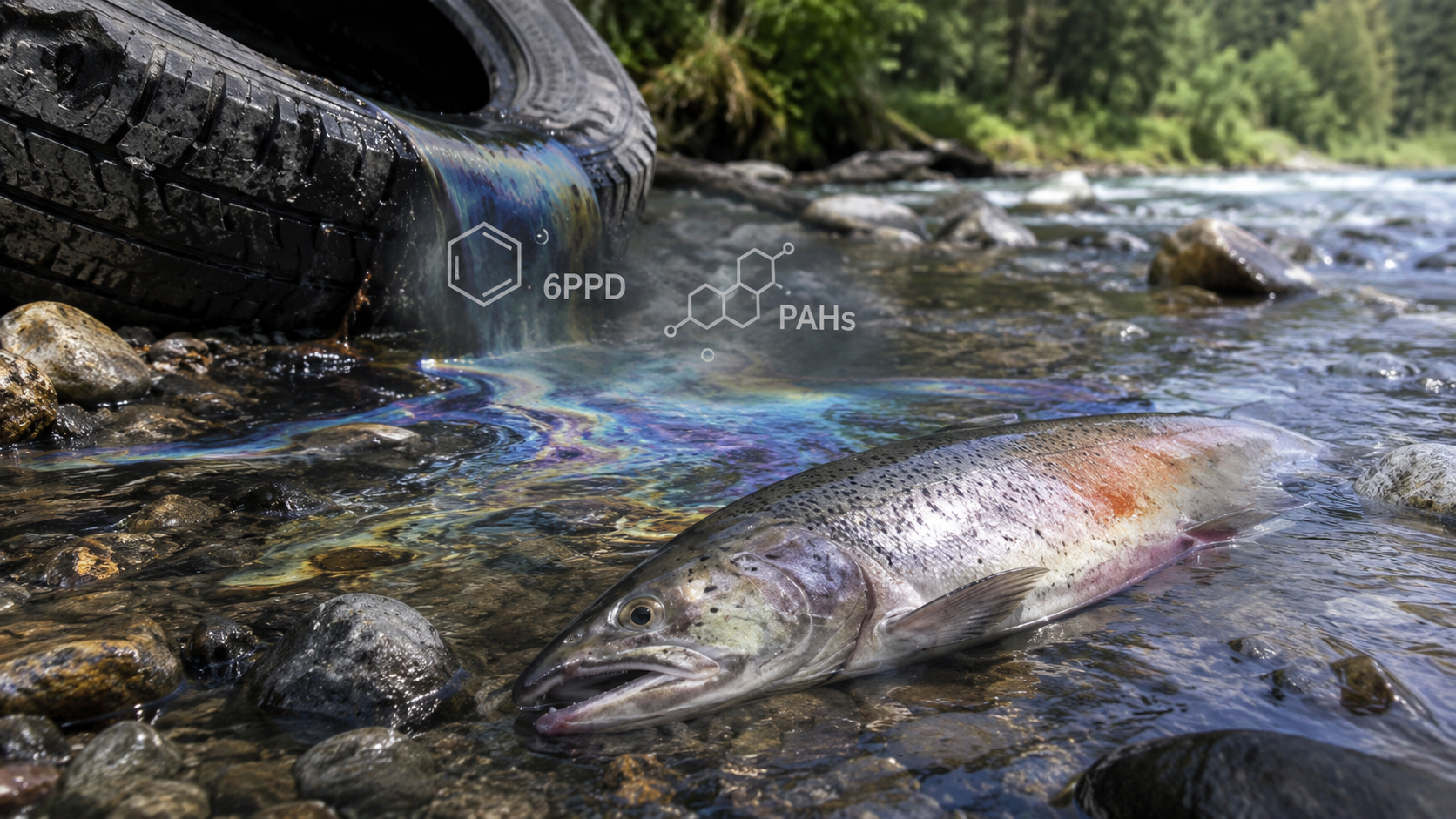
    The trouble starts after the tire is on the road. As it rolls, it sheds tiny particles of rubber. The 6PPD inside those particles reacts with ozone, which forms when vehicle exhaust meets sunlight, and turns into a different molecule called 6PPD-quinone. [2] Scientists did not identify that molecule until 2020. [1]

    That makes this story different from a factory spill or a leaking pipe. It is a steady, everyday release that comes from ordinary driving. Anyone who drives, rides a bus, or lives near a road is part of the picture.

    The salmon die-offs

    Every fall, more than half of the coho salmon that return to Puget Sound’s urban streams die before they can spawn. In some streams, none survive. [3] For years no one could explain it. After heavy autumn rains, researchers watched healthy coho swim erratically and then die within hours. [2] Scientists ruled out warm water, low oxygen and known pollutants such as zinc. [3]

    The breakthrough came when a team from the University of Washington Tacoma and Washington State University showed that stormwater alone could reproduce the symptoms, and that a solution made from tire wear particles was highly toxic to salmon. [3] Chemists then followed the toxic fractions through step after step of separation until a single molecule was left: 6PPD-quinone. [1]

    The numbers explain why it is so dangerous. In roadway runoff and storm-affected creeks on the US West Coast, the team measured 6PPD-quinone at anywhere from below 0.3 to 19 micrograms per liter. The concentration that killed half the coho in testing was only 0.8 micrograms per liter. [1] A microgram per liter is one part per billion, about the same as one drop of ink in a backyard swimming pool.

    The problem is not limited to Seattle. The same chemical turned up in runoff from Los Angeles and in creeks around San Francisco Bay. [6] Coho are also unusually sensitive. Chum salmon, for example, are much less affected. [7] Researchers even found that roughly one coho in thirty seemed largely unaffected, which they nicknamed “super-coho.” [4] Because coho react so strongly to runoff, scientists describe them as a sentinel species, a “canary in the coal mine” for roadway pollution. [2]

    How it reaches people

    Salmon meet 6PPD-quinone in the water. People can meet it in several other ways. Researchers list the likely routes as swallowing soil, sediment, dust or water, breathing in dust, and skin contact. [8] 6PPD itself has been found in soils, sediments, household dust and human urine. [9]

    It also travels to places you might not expect. Rubber from recycled tires is used on playfields and recreational trails, and runoff from those surfaces can carry 6PPD-quinone into streams. [10]

    Then there is food. In a laboratory experiment, lettuce plants took up 6PPD and 6PPD-quinone through their roots and moved them into their leaves. [11] That test used a much higher concentration than you would find in a normal garden, so it shows that uptake is possible, not that it is happening at that level. A separate study tested commercial leafy vegetables and found six tire-derived compounds in them. Its authors note that other produce may carry more and that how these chemicals travel from road to food still needs study. [12]

    Known and suspected health effects in humans

    What is known. People carry this chemical. Studies in China have found 6PPD-quinone in human urine, blood and cerebrospinal fluid, the fluid around the brain and spinal cord. [13] A study in Guangzhou, China, found higher urine levels in pregnant women than in other adults and children. [14] Researchers list three routes into the body: breathing, eating or drinking, and skin contact. [15] As of 2024, no US biomonitoring studies were available. [8]

    What is suspected. Most evidence of harm comes from animals and cells, not from people. In mice, swallowing 6PPD-quinone caused liver damage, with inflammation and disrupted fat and sugar metabolism. [16] In a lab test on human liver cell lines, 6PPD-quinone looked more harmful than its parent chemical, 6PPD. [16] Scientific reviews also point to nervous system and immune effects in model organisms, and to liver, intestinal and reproductive damage in laboratory studies. [15][17]

    An early human signal. A 2026 hospital study in China compared 283 people newly diagnosed with colorectal cancer to 515 healthy people. Higher urine levels of 6PPD-quinone and two related compounds went with higher odds of colorectal cancer. [17] This is an association only. Urine was collected within three days after diagnosis, so the study cannot show that the chemical caused the cancer, and the authors describe the link as new. It needs to be tested in other populations before anyone treats it as established. [17]

    What is not known. No human disease has been proven to be caused by 6PPD-quinone. A March 2026 review from a UK professional association says that detection in the body shows exposure but not harm, and that long-term human data are limited. [18] Researchers also do not yet know how the toxicity of 6PPD relates to that of 6PPD-quinone, and the data are too thin to estimate one from the other. [8]

    What it means for us

    There is no single polluter here to blame, and drivers cannot opt out. The US Tire Manufacturers Association says it knows of no new motor vehicle tire without 6PPD. [20] Environmental lawyers in Canada note that all tires contain either 6PPD or another chemical from the same family. [21] So this is not about individual choices. It is about what is built into a product nearly everyone uses.

    That has three practical consequences.

    • Food and water. Salmon are a food source and, for First Nations, a cultural and ceremonial one. [24] Coho also act as an early warning for a wider pollution problem. [2] Lab work shows that crops can absorb tire chemicals. [11][12] How much reaches people through food is still an open question.
    • Health. The exposure is real, and the evidence of harm is still early. Lab studies point to the liver, gut and reproductive system as the areas of most concern. [15][16][17]
    • Money. When pollution is not stopped at the source, public budgets pay for cleanup. In 2022 the Washington legislature set aside $500 million over 16 years for stormwater retrofits, and the state transportation department is planning a $6 million project to treat runoff from one Seattle bridge, due in 2028. [19]

    The Canadian picture

    Canadian roads feed the same problem. A commercial lab presented data from coastal British Columbia and nearby regions at an industry conference, reporting 6PPD-quinone in 94% of water samples, at up to 740 nanograms per liter. [5] The concentration that killed half of exposed coho in the original study was 0.8 micrograms per liter, which is 800 nanograms per liter. [1] So the highest readings sat close to a lethal level. Environment and Climate Change Canada’s own planning document says monitoring has detected 6PPD-quinone in Canadian waters at levels that may concern coho. [22]

    On policy, Canada’s 2018 screening of 6PPD found low concern, but it did not look at 6PPD-quinone, which scientists had not yet identified. [22] In February 2024 the law charity Ecojustice, acting for Raincoast, Watershed Watch Salmon Society and the Pacific Salmon Foundation, asked Ottawa to assess 6PPD. [23] On April 30, 2024 the Minister of Environment agreed to add it to the priority list, and the groups noted this was the first successful use of that request provision in the Canadian Environmental Protection Act. [9][23] By the end of 2024 the same groups said the federal work plan gave no firm timeline beyond starting the assessment in fall 2024. [26] A trade report in February 2026 still described the assessment as pending, with regulation possible if the chemical is found toxic. [27]

    There is also a human and cultural side. A petition to the Auditor General of Canada argues that weak coho stocks may limit First Nations’ ability to meet their food, social and ceremonial fishing needs. [24]

    There is a Canadian bright spot too. Researchers tested a full-scale rain garden in Vancouver and found it kept more than 90% of 6PPD-quinone out of streams under typical storm conditions. [25]

    Few environmental problems have two such clear places to intervene: the tire itself, and the runoff path from road to stream.

    A fix that fits: tire makers

    At the source. The tire industry says 6PPD protects tires from ozone cracking, a real safety issue, and that no commercially available alternative yet matches its safety and performance. [20] It has also acted. After California listed 6PPD tires as a priority product in October 2023, a consortium of 36 tire makers screened more than 60 candidates and advanced seven for further study. [20] The association’s website currently gives 2029 as the due date for its final report to California regulators. [20]

    Two cautions apply. Some of the candidates belong to the same chemical family as 6PPD, which is a known risk of swapping one problem for another. [20][21] And Washington’s Department of Ecology concluded that it was hard to tell whether any alternative would actually be safer. [25]

    This is where incentives look like a natural fit, although this part is my suggestion rather than a sourced finding. The slow, expensive steps are shared safety testing, toxicity testing and retooling. Public money for shared testing, tax credits for early adopters of a verified safer additive, or procurement rules for government fleets would speed those steps without lowering safety standards. That could be a strong follow-up article.

    Along the path. Rain gardens and engineered soil filters work. In the Vancouver study, they kept over 90% of 6PPD-quinone out of streams in typical storms. [25] In King County, Washington, improved soil mixes always brought 6PPD-quinone below the state’s proposed safe level for aquatic life. [29] The tire industry also backs interim steps: street sweeping, pavement that sheds fewer particles, and keeping tires properly inflated. [28]

    The encouraging point is that 6PPD is not a forever chemical. Once tires containing it leave the road, the damage stops. [21] That makes this one of the more solvable problems in environmental health.

    To sum up: 6PPD keeps tires from cracking, but when it reacts with ozone it forms 6PPD-quinone, which kills coho salmon at tiny concentrations. It has been found in people, and early studies raise questions about the liver, the gut and more. No human disease has been proven to be caused by it yet. The encouraging part is that this is a solvable problem, both at the tire and along the path the rain takes. Thank you for joining us at Earth Reform. The sources for everything in this article are listed below.

    Sources

    1. Tian et al., “A ubiquitous tire rubber-derived chemical induces acute mortality in coho salmon,” Science, 2021. https://doi.org/10.1126/science.abd6951
    2. Water Environment Federation, “Experts identify long sought stormwater contaminant behind salmon deaths.” https://stormwater.wef.org/2021/01/experts-identify-long-sought-stormwater-contaminant-behind-salmon-deaths/
    3. Washington State University News, “Tire-related chemical largely responsible for adult coho salmon deaths in urban streams.” https://news.wsu.edu/?p=210117
    4. Estuary News, “West Coast salmonids all tired out.” https://old.estuarynews.org/west-coast-salmonids-all-tired-out
    5. ESAA / SGS conference abstract, “6-PPD Quinone: Occurrence and Best Practices in Measurement.” https://esaa.org/wp-content/uploads/2024/02/SMART4.pdf
    6. US National Park Service, “Scientists discover silent threats to Pacific Coast salmon populations.” https://www.nps.gov/articles/000/scientists-discover-silent-threats-to-pacific-coast-salmon-populations.htm
    7. Earth.com, “What is killing coho salmon in urban streams?” https://www.earth.com/animals/what-is-killing-coho-salmon-in-urban-streams/
    8. Interstate Technology and Regulatory Council, “6PPD and 6PPD-quinone.” https://6ppd.itrcweb.org/effects-characterization-and-toxicity/
    9. Ecojustice, “Feds to investigate tire chemical implicated in mass salmon deaths.” https://ecojustice.ca/news/feds-to-investigate-tire-chemical-implicated-in-mass-salmon-deaths-but-urgent-action-needed-environmental-groups-react
    10. American Bar Association, “Tire-driven stormwater toxicity,” 2022. https://www.americanbar.org/groups/environment_energy_resources/publications/trends/2022-2023/september-october-2022/tire-driven-stormwater-toxicity/
    11. Castan et al., “Uptake, metabolism, and accumulation of tire wear particle-derived compounds in lettuce.” https://services.phaidra.univie.ac.at/api/object/o:1639158/download
    12. Sherman et al., “Uptake of tire-derived compounds in leafy vegetables and implications for human dietary exposure,” Frontiers in Environmental Science, 2024. https://doi.org/10.3389/fenvs.2024.1384506
    13. “Potential human health risk of the emerging environmental contaminant 6-PPD quinone,” Science of the Total Environment. https://www.sciencedirect.com/science/article/abs/pii/S0048969724052070
    14. “6PPD and 6PPD quinone in paired human plasma and urine from Tianjin, China,” Journal of Hazardous Materials. https://www.sciencedirect.com/science/article/abs/pii/S0304389424013979
    15. “Environmental and Human Health Risks of 6PPD and 6PPDQ: Assessment and Implications.” https://www.ncbi.nlm.nih.gov/pmc/articles/PMC12567608/
    16. “Effects of 6PPD-Quinone on Human Liver Cell Lines.” https://www.ncbi.nlm.nih.gov/pmc/articles/PMC11209231/
    17. “Associations Between Human Exposure to Substituted p-Phenylenediamine-Derived Quinones and Colorectal Cancer Risk,” Toxics, 2026. https://doi.org/10.3390/toxics14080705
    18. AGS, “6PPD-Quinone from tyres to streams,” March 2026. https://www.ags.org.uk/2026/03/6ppd-quinone-6ppd-q-from-tyres-to-streams-ecotoxicology-and-regulation-in-the-united-states-united-kingdom-and-european-union/
    19. KUOW, “Every tire produces a chemical that kills coho salmon. Can scientists pump the brakes?” https://www.kuow.org/stories/every-tire-produces-a-chemical-that-kills-coho-salmon-can-scientists-pump-the-brakes
    20. US Tire Manufacturers Association, “6PPD and tire manufacturing.” https://www.ustires.org/6ppd-and-tire-manufacturing
    21. Ecojustice, “What is 6PPD and what is it used for?” https://ecojustice.ca/news/what-is-6ppd-and-what-is-it-used-for/
    22. Government of Canada, “Plan of Priorities: substances prioritized for assessment under CEPA.” https://www.canada.ca/en/environment-climate-change/services/canadian-environmental-protection-act-registry/implementing-modernized-cepa/plan-of-priorities-landing-page/priority-substances.html
    23. Environment and Climate Change Canada, response to the request to assess 6PPD, April 2024. https://ecojustice.ca/wp-content/uploads/2024/05/Ecojustice-Response-to-Request-to-Assess-6PPD-under-section-76-of-CEPA.pdf
    24. Office of the Auditor General of Canada, petition “Effects of 6PPD tire rubber antioxidant on salmon and mitigation.” https://www.canada.ca/en/auditor-general/environmental-petitions/environmental-petitions-catalogue/effects-of-6ppd-tire-rubber-antioxidant-on-salmon-and-mitigation.html
    25. “Bioretention cells provide a 10-fold reduction in 6PPD-quinone mass loadings to receiving waters,” Environmental Science and Technology Letters. https://pmc.ncbi.nlm.nih.gov/articles/PMC10339781/
    26. Raincoast Conservation Foundation, “Urge Canada to regulate 6PPD,” December 2024. https://www.raincoast.org/2024/12/urge-canada-to-regulate-6ppd/
    27. Environmental Science and Engineering Magazine, “U.S. trial concludes over tire chemical impacts on endangered fish,” February 2026. https://esemag.com/water/us-trial-tire-chemical-impacts-endangered-fish/
    28. European Rubber Journal, “US tire group optimistic over search for 6PPD alternatives,” August 2024. https://www.european-rubber-journal.com/article/2095940/us-tire-association-optimistic-over-6ppd-alternatives-efforts
    29. King County Science and Technical Support Section, 6PPD-quinone bioretention study report, June 2024. https://www.ezview.wa.gov/Portals/_1962/Documents/6ppd-bmp/King_County_Lab_6PPDQ_Study_Report_Final%20(1).pdf

    Earth Reform Logo

    Subscribe For Our Latest Reports

    You agree to receive email communication from us by submitting this form and understand that your contact information will be stored with us.

    Listen to an educational dialogued podcast on this article. Click below.