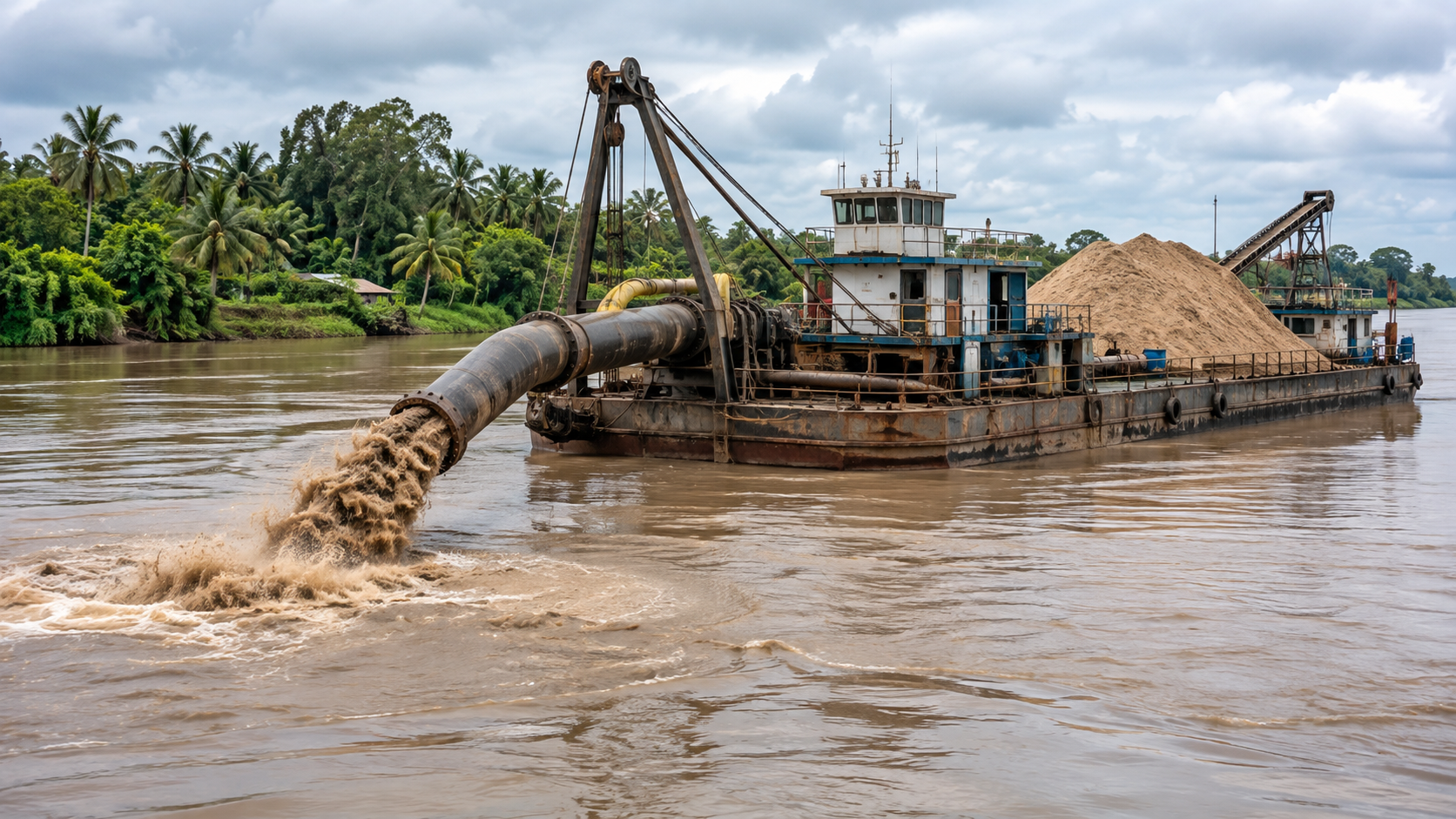
Welcome back to Earth Reform. Today we’re talking about something you’ve walked on, poured out of your shoes, and probably never thought of as scarce: sand.
Here is a number to hold onto. Every year, humanity digs up roughly fifty billion tonnes of it. That is more than we extract of any other solid material on Earth. And in the places where it’s being taken, people have been killed for trying to stop it, islands have slipped beneath the waves, and a critically endangered porpoise has been squeezed out of parts of its own home.
It also reaches us. We’ll get to what it means for the price of construction, for the beaches and flood defences that protect coastal homes, and for the climate. Let’s get into it.
The Resource Nobody Counts
Ask someone to name the world’s most heavily used natural resources and you’ll hear oil, water, maybe wheat. Sand rarely comes up. Yet the United Nations Environment Programme (UNEP) published its third major report on the subject in May 2026, and it estimates that we use about 50 billion tonnes of sand a year, faster than nature can replace it. The authors call that shortfall “the sand gap,” and they project that sand demand for buildings alone could rise by as much as 45% by 2060. [1] An earlier UNEP report put the volume in perspective: enough to build a wall 27 metres high and 27 metres wide around the entire planet. [2] A landmark 2017 paper in Science went further, noting that sand and gravel now outweigh fossil fuels and biomass as the most extracted group of materials on Earth. [3]
So why a shortage, with all those deserts? Because not all sand is equal. Desert grains are generally too round and fine to make strong concrete, so builders want the angular sand found in rivers, lakes, and the sea floor. [4] That sand took hundreds of thousands of years to form through slow erosion, and once it’s locked into concrete, asphalt, or glass, it is effectively lost to nature. The UNEP authors call it “dead” sand. [1] In the United States, for example, about 42% of construction sand and gravel goes into concrete, 20% into road base, 12% into fill, and 9% into asphalt. [5]
Then comes the human catch. Sand is heavy, cheap, and in most places nobody truly owns a riverbed. Researchers describe this as a classic “commons” problem, where everyone has a reason to take a little more. [3] The pattern is old. Hong Kong set up a state monopoly over sand mining in the early 1900s after competition for sand turned violent, and it kept that monopoly until 1981. Today, the same researchers note, organized crime groups in India, Italy, and elsewhere run illegal sand trades. [6]
The Sand Mafias
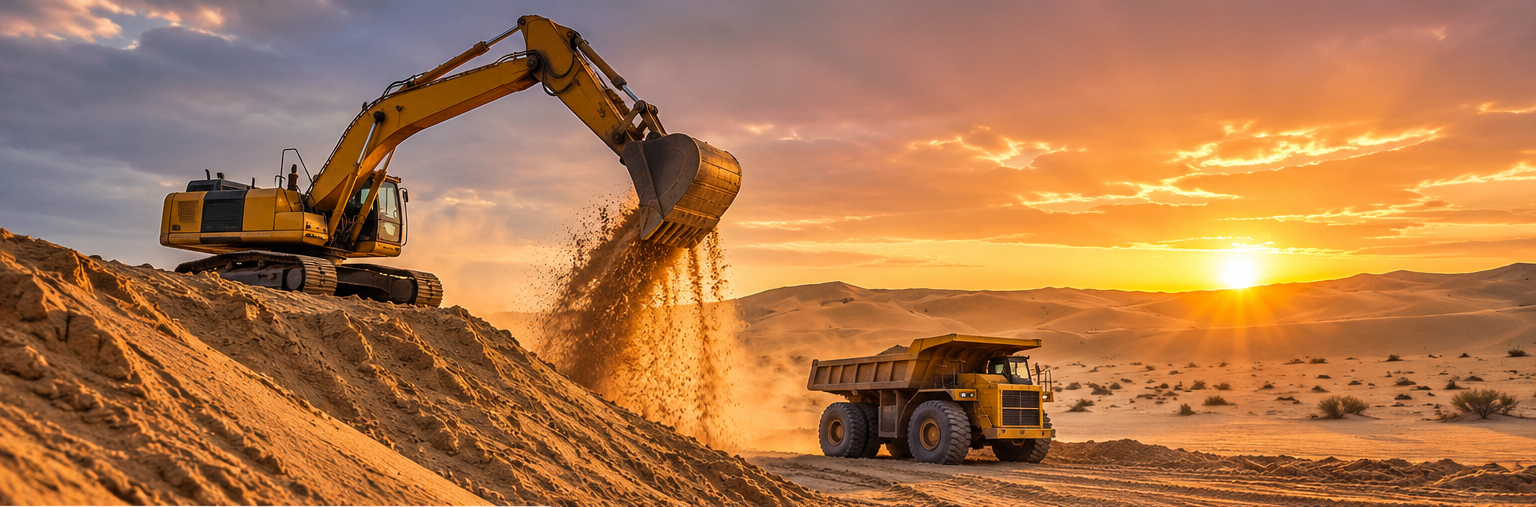
India is where the human cost is best documented, largely thanks to SANDRP, a network that tracks rivers and dams and compiles incidents from news reports. For the 16 months from December 2020 to March 2022, it counted at least 418 deaths and 438 injuries linked to sand mining. Most were road accidents involving mining vehicles, and another 95 deaths came from collapses and similar accidents. But 12 people were killed in outright mining-related violence. [7] Because the count relies on English-language media, and because India’s national accident statistics don’t track mining as its own category, the true figure is likely higher. [7]
A separate SANDRP tally, covering the period since January 2019, recorded 5 journalists and activists, 11 government officials, and 23 villagers, farmers, and other citizens killed over illegal sand mining. [8] Among the earlier cases: Narendra Kumar, a police officer, was killed in March 2012 in Morena, Madhya Pradesh, where the Chambal riverbed is made of fine sand. [8] The investigative network Forbidden Stories reports that at least four Indian journalists have allegedly been killed while reporting on the sand mafias, which it describes as among the most violent organized crime groups in the country. [9] And in 2004, Sumaira Abdulali, one of India’s best-known environmental activists, was beaten after she went to an illegal mining site. [10]
This is not only a sand story. Global Witness recorded 1,738 environmental defenders killed across 50 countries between 2002 and 2018, and found that only about 10% of the killings from 2002 to 2013 ended in a conviction, against roughly 43% for homicides worldwide in 2013. [11] That gap in justice is part of why the violence continues.
Corruption feeds it. In Vietnam’s Mekong Delta, police arrested a senior official in An Giang province in 2023 for allegedly taking $50,000 in bribes from a mining company. [12] Where regulators are thinly staffed and the product is untraceable, enforcement tends to lose.
Sinking Deltas and Vanishing Islands
The Mekong Delta in Vietnam supports food and livelihoods for tens of millions of people. A 2023 WWF “sand budget” found that Vietnam’s delta was losing sand to mining at 35 to 55 million cubic metres a year, while only about 4 million cubic metres of sand had flowed down the river the year before, against an average of up to 7 million. The report warned that the exploitable sand under the riverbed could last roughly a decade. And its authors said even their mining figures were probably low, because they could not count the night-time dredging that many illegal operators are known for. [12]
Measuring the damage is hard because mining overlaps with other pressures, such as upstream dams, rising seas, and groundwater pumping. One scientific review found that estimates of annual sand extraction in the delta range from 8.5 to 45.7 million cubic metres, depending on the method, with illegal mining a major reason for the uncertainty. [13] Licensed mining alone accounted for 27.7% of net riverbed deepening over 2005 to 2017 and 35.3% over 2017 to 2020. [14]
A study published in Science Advances in July 2026 tackled the confounding problem directly. Using real data from 131 active mining zones, the researchers ran the delta’s hydrology twice: once with mining, and once in a virtual world without it. The difference was striking. Sand mining alone explained roughly 16 to 30% of the annual increase in salinity, pushing salt water up to about 1.5 kilometres further inland during the dry season. [15] For a delta that provides food and livelihoods for tens of millions of people, saltier water moving inland is a serious concern.
Riverbanks pay too. Research on the Mekong in Cambodia found that lowering the riverbed by just two metres is enough to make many banks collapse, while dredging pits often exceed eight metres. [16] The investigative writer Vince Beiser reports that, squeezed between sand miners and upstream dams, the Vietnamese delta has been shrinking at the rate of about a football field and a half every day. [17]
When the sand goes abroad
Some of the most dramatic losses happen far from the building sites that use the sand. Singapore has expanded its land area by about 24% using imported sea sand. [19] More than 80 million tonnes of Cambodian sand alone went into Singapore’s expansion. [18] In Indonesia, unchecked exports destroyed 26 small islands in the Riau province, and before an export ban more than 50 million tonnes a year were shipped to Singapore. [19]
In Cambodia’s Koh Kong province, fishers watched their crab and fish catches collapse as dredgers worked the mangrove estuaries. A local group, Mother Nature, then used UN trade data to show Cambodia was massively under-reporting how much sand it exported. Under that pressure, the government banned sand exports to Singapore in late 2016. [17] An activist from the group told National Geographic that fish catches have been rising steadily since. [17] Indonesia’s Nipah Island, once a prime mining site, has shown signs of ecological recovery since the 2003 export ban. [21]
There is a twist. In 2023, Indonesia lifted its export ban. The government says new permits target sediment that blocks shipping lanes rather than the seabed itself, but 66 companies had applied for permits within months. [19][20] Critics worry the story is about to repeat.
The Animals Caught in the Middle
The clearest evidence of what sand mining does to wildlife comes from China’s Dongting Lake, which connects to the Yangtze River. The Yangtze finless porpoise is the world’s only freshwater porpoise, it is critically endangered, and it has only about 1,000 individuals left. [22][23] Its cousin, the Yangtze river dolphin or baiji, is listed as possibly extinct. [23]
In a 2023 study in Proceedings of the Royal Society B, researchers combined satellite imagery with 14 years of field surveys. Sand mining, which they note has tripled in the last two decades, was a consistent, widespread disturbance across the lake. The porpoises strongly avoided mining sites, especially the busiest ones, and their range shrank. The boat traffic hauling sand also blocked their movement between lake and river, and the loss of shallow near-shore habitat, a key feeding and nursery ground, occurred in nearly 70% of the water channels studied. [22] By 2009, gaps between porpoises in the lake had stretched to 27 kilometres, more than a third of their range there. The animal breeds only once every 18 months, so a stressed population recovers slowly. [22]
There is a hopeful footnote. After a mining ban in 2017, porpoises were spotted in lake stretches they had previously avoided. [22]
Other river dolphins face a similar squeeze. The Ganges river dolphin, listed as endangered with an estimated 3,500 to 4,000 animals, is threatened by pollution, dams, fishing nets, and, among other pressures, sand mining. [23][24] In the sea, dredging clouds the water and stirs up sediment that can smother seagrass and coral. [25] According to UNEP’s Marine Sand Watch, about half of the dredging companies it tracks operate inside Marine Protected Areas, accounting for 15% of the volume dredged. [1]
People can be harmed by the same changes. Sand-pit pools left behind may play a role in spreading emerging diseases such as Buruli ulcer, a bacterial skin infection in West Africa, according to the researchers behind the 2017 Sciencepaper. [6] And in Sri Lanka, the same lead author has said, sand mining made the effects of the 2004 Indian Ocean tsunami worse. [4]
How the Sand Wars Reach Us
It would be easy to file all this under “problems far away.” But sand sits underneath the costs and protections we rely on in wealthy countries too.
Your building costs
In its February 2026 outlook, the U.S. Geological Survey said conditions supporting higher construction sand and gravel prices were expected in 2026, especially in and near cities, and that shortages in some urban and industrial areas were anticipated. [5] The cause is not always mining abroad. Often it is simply that the nearby deposits are used up, or that residents don’t want new pits. Los Angeles builders, for instance, have reportedly been importing sand and gravel from Vancouver Island in Canada because local quarries are largely tapped out, and hauling it that far raises both prices and emissions. [26] The pattern is global: an Australian industry group says southern Tasmania has effectively exhausted its natural sand suitable for concrete and now relies on sand trucked from elsewhere, [27] and the Bahamas Contractors Association reported in May 2026 that sand and other bulk materials had risen by as much as 30% in recent months. [28]
When the cheapest input to concrete, asphalt, and glass gets more expensive, it shows up in the price of housing, roads, schools, and the infrastructure that taxes pay for.
Your beaches and coastline
Sand is also what keeps many shorelines in place. Florida has spent at least $1.9 billion over 87 years replenishing its beaches, and state and local governments continue to pay $30 to $50 million a year. Some communities, such as Miami Beach, have paid $30 to $50 per cubic yard for sand. [29] Having run out of nearby offshore sand, some southern Florida towns now haul it from inland quarries by truck, which can easily double the cost compared with dredged sand, and taxpayers cover the bill. [30]
Meanwhile, thieves have stripped entire beaches in Morocco, Algeria, and Russian-occupied Crimea for construction sand. [30] In 2008, around 500 truckloads of sand were removed from a Jamaican beach in a single night. [31]
The stakes go beyond tourism. UNEP has recommended banning sand extraction from beaches because of their importance for coastal resilience. [2] The agency’s Pascal Peduzzi describes sand as our first line of defence against sea-level rise, storm surge, and the salting of coastal aquifers. [32] Take away the buffer, and the cost of flood protection, insurance, and groundwater treatment lands on the people living behind it.
Your climate
Sand is only one ingredient in concrete. The binder, cement, is made at very high temperatures from limestone, and more than 4 billion tonnes of it are produced every year, accounting for around 8% of global CO2 emissions. [33] More than 10 billion tonnes of concrete are used annually, and cement demand is set to climb with urbanization. [34] A building boom drains riverbeds on one end and warms the atmosphere on the other.
What Would Move the Needle
The most promising levers sit with the producers, builders, and the money behind them, not with households at the pump or the checkout.
UNEP’s 2026 report says financial systems and public procurement should better account for the environmental and social risks of sand, and that incentives should support circular alternatives and reduce extraction pressure. [35] One of the report’s authors says development banks, export credit agencies, insurers, and lenders channel vast sums into dredging and infrastructure while the risks tied to sand extraction remain consistently underpriced. [36]
There is early evidence that incentives work. A German study of concrete made with recycled aggregates tested several policy tools on construction clients. All had a positive effect in at least one client group, but only financial incentives worked across every group. [37] Singapore’s 2008 Sustainable Construction Master Plan funded projects such as using recycled concrete aggregate in structural concrete and turning dredged material and industrial waste into synthetic sand. [38] In Europe, recycled and reused materials made up about 9.3% of aggregate production, and five countries (Belgium, the UK, the Netherlands, Germany, and France) produce around 90% of the recycled aggregate. [39] In the United States, by contrast, the recycled share of aggregate remains very small. [5] Another route is manufactured sand made from by-products of ore mining, a pathway already in use by the iron ore company Vale in Brazil, among others. [19]
Three caveats keep this honest. First, a Stanford scientist quoted in the trade press says we are unlikely to run out of sand outright, but shortages of usable construction sand do occur regionally. [40] Second, recycled aggregate has technical limits: the cement mortar still stuck to the pieces makes it more porous, which restricts some structural uses. [38] Third, demand keeps growing. A Leiden University team modelled future global sand demand and outlined ways that material efficiency could reduce it, which points to managing demand as well as supply. [41] In other words, this is a problem to be managed, and UNEP says early, coordinated intervention is still possible and cost-effective. [1]
Sand looks endless because we only ever see its surface: a beach, a dune, a desert. The sand we build with is different. It is slow to form, regional, and finite, and the bill for taking it is often paid first by the people with the least say: fishers in Koh Kong, villagers and officials in India, a porpoise in Dongting Lake. Eventually it is paid by the rest of us, in the cost of building and in the strength of our coastlines.
But the evidence also holds some good news. When mining stopped in Dongting Lake, porpoises were seen in stretches they had avoided. When Cambodia shut down its exports, fishers reported better catches. When Indonesia stopped selling its sea sand, Nipah Island began to heal. The question now is whether the builders, banks, and governments who set the rules will put a price on sand before it runs short.
Sources
Peer-reviewed papers are marked (peer-reviewed). Where I read a university or news summary rather than the full paper or report, the entry says so. Entries 10, 29, 31, and 40 are student, advocacy, or trade publications and are used only for the narrow facts cited.
- UNEP (2026), Sand and Sustainability: An Essential Resource for Nature and Development, https://wedocs.unep.org/items/b037d0d7-b899-4969-9b9a-b5c36dd32abe. Figures taken from summaries by CSIC-Doñana Biological Station (15 May 2026), https://www.ebd.csic.es/en/outreach/news/new-un-report-warns-global-sand-crisis-and-proposes-measures-its-sustainable, and EOS (Eos.org), https://eos.org/research-and-developments/sand-demand-outpaces-sustainable-extraction
- UNEP (2022), Sand and Sustainability: 10 Strategic Recommendations to Avert a Crisis, as reported by UN News, https://news.un.org/en/node/1116972
- Torres, A., Brandt, J., Lear, K., & Liu, J. (2017), “A looming tragedy of the sand commons,” Science 357(6355): 970–971, https://doi.org/10.1126/science.aao0503 (peer-reviewed); abstract via Boise State, https://scholarworks.boisestate.edu/hes_facpubs/11, and summary via ChemistryViews, https://www.chemistryviews.org/?p=32850
- ZME Science (2017), interview with lead author Aurora Torres, https://zmescience.com/ecology/environmental-issues/hidden-shortage-world-running-low-sand
- U.S. Geological Survey (Feb 2026), Mineral Commodity Summaries 2026: Sand and Gravel (Construction), https://pubs.usgs.gov/periodicals/mcs2026/mcs2026-sand-gravel.pdf
- Torres, A., Liu, J., Brandt, J., & Lear, K. (2017), “Exploitation of global sand supply becoming a crisis,” UPI, https://www.upi.com/Science_News/2017/09/08/Exploitation-of-global-sand-supply-becoming-a-crisis/2201504875465/
- Mongabay-India (via Eco-Business), “Unaccounted deaths plague sand mining operations in India,” reporting a SANDRP study, https://www.eco-business.com/ms/news/unaccounted-deaths-plague-sand-mining-operations-in-india/
- Down To Earth, “A reminder: Haryana DSP isn’t the first to be killed by mining mafia” (citing SANDRP data), https://www.downtoearth.org.in/news/a-reminder-haryana-dsp-isn-t-the-first-to-be-killed-by-mining-mafia-83812
- Forbidden Stories, “Mines’ dirty secrets echo on three continents,” https://forbiddenstories.org/?p=2865
- Berkeley Political Review (2019), “Murder and Famine: Sand’s Story in 21st Century India,” https://bpr.studentorg.berkeley.edu/2019/04/30/murder-and-famine-sands-story-in-21st-century-india/
- Dialogue Earth (2019), “More than 1,700 activists have been killed this century defending the environment” (Global Witness data), https://dialogue.earth/en/justice/more-than-1700-activists-have-been-killed-this-century-defending-the-environment/
- AFP via The Star (6 Oct 2023), reporting the WWF report Sand Budget for Viet Nam Mekong Delta, https://thestar.com.my/aseanplus/aseanplus-news/2023/10/06/vietnam039s-mekong-delta-may-run-out-of-sand-by-2035-reports-study
- “Sand mining in the Mekong Delta: Extent and compounded impacts,” Science of the Total Environment 924 (May 2024) (peer-reviewed review; abstract read via Earth Observatory of Singapore), https://earthobservatory.sg/research/publications/sand-mining-in-the-mekong-delta-extent-and-compounded-impacts
- “Intensified susceptibility to riverbed incisions under sand mining impacts in the Vietnamese Mekong Delta: A long-term spatiotemporal analysis” (peer-reviewed; abstract via APN), https://www.apn-gcr.org/publication/intensified-susceptibility-to-riverbed-incisions-under-sand-mining-impacts-in-the-vietnamese-mekong-delta-a-long-term-spatiotemporal-analysis/
- Kumar, S., et al. (2026), “Counterfactual modeling isolates sand mining impacts, revealing it as a key driver of Mekong Delta destabilization,” Science Advances (8 July 2026) (peer-reviewed; abstract read via Earth Observatory of Singapore, https://earthobservatory.sg/research/publications/counterfactual-modeling-isolates-sand-mining-impacts-revealing-it-as-a-key-driver-of-mekong-delta-destabilization; study details from NTU Singapore, https://www.ntu.edu.sg/nie/news-events/news/detail/sand-mining-is-destabilising-the-mekong-delta-far-more-than-previously-understood–nie–ntu-singapore-study-finds)
- Hackney, C. R., et al. (2020), Nature Sustainability, https://doi.org/10.1038/s41893-019-0455-3 (peer-reviewed); findings read via University of Southampton summary, https://phys.org/news/2020-01-unsustainable-sand-threatening-mekong-river.html
- Beiser, V. (2019), National Geographic, https://on.natgeo.com/2PtTwsz and https://www.nationalgeographic.com/environment/2019/04/sand-mining-cambodia-the-lost-world-film/
- EU-AFD Research Facility on Inequalities (2021), Livelihood Impacts of Sand Mining in Cambodia, https://afd.fr/sites/default/files/2021-03-03-37-47/Livelihood%20Impacts%20of%20Sand%20Mining%20in%20Cambodia.pdf
- Bioantika & Octaviano (2025), “The last time it was legal, exports of sea sand destroyed dozens of Indonesian islands. Now, the ban is being lifted,” The Conversation, https://theconversation.com/the-last-time-it-was-legal-exports-of-sea-sand-destroyed-dozens-of-indonesian-islands-now-the-ban-is-being-lifted-246325 (read via University of Queensland Sustainable Minerals Institute, https://smi.uq.edu.au/node/14552)
- The Jakarta Post (26 Sep 2024), “Analysis: Govt lifts 20-year sea sand export ban, endangering small islands,” https://www.thejakartapost.com/opinion/2024/09/27/analysis-govt-lifts-20-year-sea-sand-export-ban-endangering-small-islands
- Dialogue Earth, on Indonesia’s resumption of sea sand exports and Nipah Island, https://dialogue.earth/en/?p=60070389
- Han, Y., Xu, W., Liu, J., Zhang, X., Wang, K., Wang, D., & Mei, Z. (2023), “Ecological impacts of unsustainable sand mining: urgent lessons learned from a critically endangered freshwater cetacean,” Proceedings of the Royal Society B 290(1990): 20221786, https://doi.org/10.1098/rspb.2022.1786 (peer-reviewed); additional details from Down To Earth, https://www.downtoearth.org.in/news/wildlife-biodiversity/critically-endangered-yangtze-finless-porpoise-return-to-lost-lake-stretches-after-sand-mining-ban-report-87199
- Review of river dolphin threats and management, Endangered Species Research 49: 13–42 (2022), https://doi.org/10.3354/esr01201 (peer-reviewed; open copy at https://researchonline.jcu.edu.au/76696/1/76696.pdf)
- Acharjya, N. K., et al. (2025), “Status of Ganges River dolphin Platanista gangetica in the lower stretch of the Ganga River, India, with emphasis on threats,” Frontiers in Ecology and Evolution, https://doi.org/10.3389/fevo.2025.1523537 (peer-reviewed)
- Michigan State University, “The rising tide of sand mining: a growing threat to marine life” (on a One Earth paper by Torres, Liu, and colleagues), https://www.canr.msu.edu/news/the-rising-tide-of-sand-mining-a-growing-threat-to-marine-life
- The Real Deal, “Sand trap,” https://therealdeal.com/issues_articles/sand-trap/
- S&P Global (Nov 2025), “Australian concrete industry urges govt action as Tasmania sand supplies dwindle,” https://www.spglobal.com/energy/en/news-research/latest-news/fertilizers/112825-australian-concrete-industry-urges-govt-action-as-tasmania-sand-supplies-dwindle
- The Tribune (Bahamas, 22 May 2026), “Construction feels pressure from 30% aggregate jump,” https://tribune242.com/news/2026/may/22/construction-feels-pressurefrom-30-aggregate-jump/
- Environmental Defense Fund, Growing Returns blog (3 Oct 2023), https://blogs.edf.org/growingreturns/2023/10/03/will-adding-more-sand-to-floridas-beaches-save-them-experts-share-why-this-isnt-enough/
- Beiser, V., Wall Street Journal excerpt on beaches (author’s site), https://vincebeiser.com/wp-content/uploads/2026/01/WSJ-beaches.pdf
- Bard College Center for Environmental Policy blog, “The True Price of Paradise: The Rising Scarcity of Sand and Its Impacts,” https://blogs.bard.edu/cepblog/?p=14053
- University of Plymouth, “Sand is not unlimited, we need to treat it responsibly” (on the 2026 UNEP report), https://www.plymouth.ac.uk/news/sand-is-not-unlimited-we-need-to-treat-it-responsibly
- Lehne, J. & Preston, F. (2018), Making Concrete Change: Innovation in Low-carbon Cement and Concrete, Chatham House, https://www.chathamhouse.org/2018/06/making-concrete-change-innovation-low-carbon-cement-and-concrete
- Carbon Brief (2018), “Q&A: Why cement emissions matter for climate change,” https://www.carbonbrief.org/qa-why-cement-emissions-matter-for-climate-change
- IUCN NL, “Global sand extraction is outpacing nature, warns new UN report,” https://www.iucn.nl/en/?p=434322
- Stockholm Resilience Centre (12 May 2026), “Use sand wisely, warns UN in new report,” https://www.stockholmresilience.org/research/research-stories/2026-05-12-use-sand-wisely-warns-un-in-new-report.html
- Sterk, E., “Incentives for construction clients in Germany to choose concrete with recycled aggregates” (EconBiz record), https://www.econbiz.de/Record/incentives-for-construction-clients-in-germany-to-choose-concrete-with-recycled-aggregates/10014286271
- Ong, K. C. G., Anggadjaja, E., & Soh, S. L. Y., “Sustainable Construction Strategies: A Singapore Perspective,” https://www.irbnet.de/daten/iconda/CIB14269.pdf
- University of Liège, report on sand resources in North-West Europe, https://orbi.uliege.be/bitstream/2268/320465/1/WP%20T1.1%20-%20Sand%20resources%20in%20NWE.pdf
- Building Design + Construction (2022), “Add sand shortage to supply chain woes,” https://bdcnetwork.com/add-sand-shortage-supply-chain-woes
- Leiden University team (2022), global sand demand and material-efficiency scenarios, Nature Sustainability, https://www.nature.com/articles/s41893-022-00869-w (peer-reviewed; read via Phys.org, https://phys.org/news/2022-03-global-sand-demand-years-ways.html)

Leave a Reply